



If you've ever walked down the organized aisles of a modern supermarket, you've likely noticed the sleek, unobtrusive shelves that make it easy to grab everything from cereal to canned beans. As a supplier of single-side supermarket shelves-those units positioned against walls to display products rather than taking up valuable floor space in store centers-I've spent years refining our products to balance functionality, cost, and, increasingly, environmental responsibility. Too often, when retailers and operators talk about shelf impacts, they fixate on how well a unit holds canned goods or aligns with a store's brand, not the footprint of actually making that shelf. Today, I want to pull back the curtain on what goes into producing these essentials, because understanding their environmental toll isn't just a "nice-to-have"-it's critical to building a more sustainable retail supply chain for everyone.
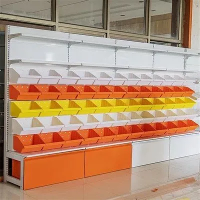
First, let's ground this in what single-side supermarket shelves actually are, because not all units are created equal. You've probably seen them: narrow enough to fit along a 12-foot wall, with adjustable tiers, metal frames, and often some kind of backing to keep products from falling into foot traffic areas. When we source materials for our own lines, like those highlighted on our page for Modern Supermarket Shelves, we're working with three core components: metal, wood-based composites, and protective finishes. Each of these has its own set of environmental costs, and skipping the deeper dive on them would do a disservice to retailers looking to cut their emissions.


Starting with the biggest piece: the metal frame. Most single-side shelves are built from steel, because it's strong, relatively lightweight, and easy to form into the precise shapes retailers need. Steel production is notorious for its environmental impact, and for good reason. The standard method for making steel in most parts of the world uses blast furnaces, which burn coking coal to heat iron ore to extreme temperatures. That process releases two major pollutants: carbon dioxide, the primary driver of climate change, and particulate matter, which contributes to poor air quality in nearby communities. For every ton of steel produced via traditional blast furnaces, you're looking at roughly 2 tons of CO₂ emitted, according to the World Steel Association. That's a staggering number when you consider a single supermarket might buy 50 to 100 single-side shelf units during a remodel-translating to hundreds of pounds of CO₂ right there, before any other parts are even made.
But it's not just carbon emissions. Steel production also requires massive amounts of water. Processing iron ore into steel involves washing and cooling steps that can use up to 40 liters of water per kilogram of finished steel, though modern mills have cut that number in half in recent decades. The catch? Those water savings only happen if the mills have proper waste treatment systems. Without them, runoff from steel production can carry heavy metals like lead and zinc into local waterways, harming aquatic life and contaminating groundwater. For single-side shelves, many of the metal components-like the vertical posts that anchor the unit to the wall-are galvanized with zinc to resist rust, which adds another layer of metal processing that increases water and energy use.
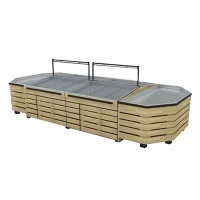
Now, not all single-side shelves are made from pure steel. Many retailers opt for hybrid units, like those listed under Steel Wood Supermarket Shelves, which combine a steel frame with wood-based panels for the shelf tiers and backing. That's where another big environmental factor comes in: sourcing and processing wood. If you're working with solid wood, the primary concerns are deforestation and biodiversity loss. The wood used for furniture and retail fixtures often comes from tropical or old-growth forests, which are critical carbon sinks and home to millions of species. Even wood from "sustainable" plantations can have a smaller scale toll-planting monoculture tree farms, for example, can reduce soil fertility over time and displace native plant species that would otherwise support pollinators.
That said, not all wood-based shelf components are made from solid wood. Many suppliers, including us, use medium-density fiberboard (MDF) or particleboard, which are made from wood chips, sawdust, and resin. MDF is cheaper and more uniform than solid wood, but its production has its own downsides. The formaldehyde-based resins used to bind wood particles together can emit volatile organic compounds (VOCs) during manufacturing, which contribute to air pollution and can also linger in the finished product, impacting indoor air quality in stores. For retailers, that's a double whammy: not only is the production of MDF more energy-intensive than solid wood in some cases, but the VOC emissions from new shelves can also mean a delay in stocking a new location until those fumes dissipate-costing time and sales.
The third major component of any single-side shelf is the protective finish, whether that's paint, powder coating, or a laminate. Finishes are designed to make shelves durable, easy to clean, and aesthetically pleasing-key for busy supermarkets that need units to hold up to constant use. But many conventional finishes are made with harmful chemicals that add to the environmental footprint. Liquid paint, for example, often contains VOCs that are released during application and drying, contributing to smog. Powder coating is a more environmentally friendly alternative in some ways, because it's solvent-free and produces less waste-any overspray can be recycled and reused. But powder coating still requires high heat to cure, which uses a significant amount of energy, often from fossil fuel-powered sources. Laminate finishes, common on wood-based shelf tiers, are made from plastic layers that don't biodegrade easily, adding to plastic waste if the shelf is thrown away at the end of its life.
Beyond the materials themselves, the manufacturing processes for single-side shelves add another layer of environmental impact. The metal framing requires cutting, bending, and welding, all of which use large amounts of energy. Steel mills, even modern ones, are energy-intensive-though electric arc furnaces (EAFs), which use recycled steel, have a smaller carbon footprint than blast furnaces. An EAF produces roughly 75% less CO₂ per ton than a traditional blast furnace, which is why more shelf suppliers are shifting to recycled steel. The challenge, though, is that recycled steel demand often outpaces supply, and not all scrap steel is equal-contaminants in scrap can require additional processing that cancels out some of the carbon savings.
Then there's transportation. Most single-side shelves are manufactured in centralized facilities, often in regions with lower labor costs, and then shipped to retailers across the country or even internationally. That transportation adds to the carbon footprint of the product. A single shipment of 50 shelf units, packed on a pallet, might travel hundreds or thousands of miles via truck or ship-each mile adding CO₂ emissions. For retailers, choosing a local supplier like us, rather than one overseas, can cut that transportation footprint by a significant amount. On our page for Display Supermarket Racks, for example, we highlight our ability to deliver within North America within two weeks, reducing the need for long-haul shipping.
Now, you might be wondering: is there a way to mitigate all these impacts? As a shelf supplier, we've spent years testing and refining our products to lower their environmental footprint without sacrificing quality or functionality. One of the biggest changes we've made is shifting our steel sourcing to 100% recycled EAF steel, which cuts the carbon footprint of our metal frames by 70% compared to virgin steel. We've also worked with our wood suppliers to source FSC-certified wood for our hybrid steel wood shelves, ensuring that the wood comes from responsibly managed forests that protect biodiversity and support local communities. For finishes, we've switched to water-based paint and powder coating that meet low-VOC standards, reducing air pollution during manufacturing and eliminating harmful fumes that could affect store environments.
Another key factor in reducing the environmental impact of single-side shelves is extending their lifespan. A shelf that lasts 20 years has a much smaller footprint than one that needs to be replaced every 5 years. That's why we design our shelves with adjustable tiers and modular parts-if a vertical post gets damaged, you can replace just that post instead of the entire unit. We also offer repair services and spare parts, so retailers can keep their shelves in use for decades. On our page for Grocery Store Display Racks, you can see examples of our modular design, which has been installed in stores that have been open for 15+ years with no need for full shelf replacements.
When a shelf does reach the end of its life, recyclability is another important consideration. Steel is 100% recyclable indefinitely, without losing quality, so the metal parts of our shelves can be melted down and turned into new steel products. The wood-based components, if they're made from FSC-certified wood, can be recycled or composted, especially if we use low-formaldehyde adhesives that break down more easily. We've also started a take-back program for old shelves, where retailers can send back units that are no longer needed, and we disassemble them to recycle or donate usable parts. This keeps thousands of pounds of steel and wood out of landfills every year.
Of course, there are still challenges. Even with recycled steel, manufacturing still uses energy, and transportation can't be eliminated entirely. But by being transparent about our production processes, we're hoping to work with retailers to make better choices. For example, many retailers don't realize that the type of shelf they choose has a bigger environmental impact than they think-opting for a sturdy, modular single-side shelf might cost a bit more upfront, but it saves money in the long run by reducing replacement costs and cutting the overall carbon footprint of their store. The grocery display shelves we offer on our website are designed to balance durability, functionality, and sustainability, so retailers don't have to choose between their bottom line and the planet.
I often talk to store managers who care about sustainability but don't know where to start. Choosing single-side shelves might seem like a small part of a larger supply chain, but when you consider how many shelves a single store uses, it adds up. A 50,000-square-foot supermarket might have 1,000 linear feet of single-side shelves-translating to 200+ individual units. If each of those units has a carbon footprint of 500 pounds of CO₂ (a conservative estimate for traditional steel shelves), that's 100,000 pounds of CO₂ per store. Switching to recycled EAF steel could cut that to 15,000 pounds of CO₂, a 85% reduction. Multiply that by 100 stores, and you're looking at thousands of tons of CO₂ saved-just from changing one small part of a store's setup.
Another often-overlooked impact of single-side shelves is their role in reducing food waste. Wait, you might be thinking-how does a shelf relate to food waste? Well, a well-organized, sturdy shelf that holds products securely reduces the chance of items falling and being damaged or spoiled. Many of our modern shelves are designed with sloped tiers that keep products at eye level, making it easier for customers to see what's available and avoid overbuying. For retailers, that means less unsold and wasted food, which has its own massive environmental footprint-food waste is responsible for roughly 8% of global greenhouse gas emissions, according to the UN Food and Agriculture Organization. So by creating shelves that help reduce food waste, we're adding another layer of environmental benefit beyond just the shelf itself.
At the end of the day, producing single-side supermarket shelves isn't just about making a metal frame or a wooden tier-it's about balancing functionality, cost, and environmental responsibility. As a supplier, we're committed to continuous improvement, whether that's switching to more sustainable materials, optimizing our manufacturing processes to use less energy, or offering take-back and recycling programs. For retailers, the choice of shelf might seem minor, but it's a meaningful way to reduce the environmental impact of their operations.
If you're a supermarket operator or designer looking to learn more about how our single-side shelves can work for your store-from modern units that fit your brand to steel wood hybrid options that balance durability and style-we're here to help. We can walk you through our sustainability practices, show you samples of our products, and work with you to find the right solution for your space and your goals. Reach out to our team to start a conversation about creating shelves that work for your store, your customers, and the planet.