


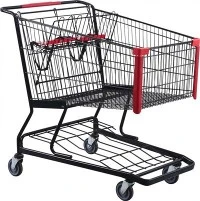
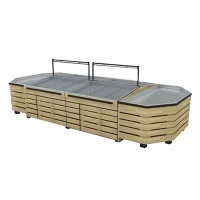

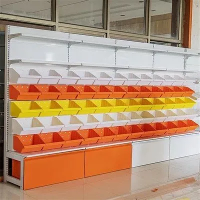
If you've ever worked in a grocery store, a farmers' market stall, or even run a small home garden supply shop, you know that how you display and store fresh produce makes a huge difference. Let's face it: veggies can be tricky. They need to stay accessible, well-ventilated, and above all, safe. That's where iron vegetable racks come in-specifically, the sturdy, purpose-built ones we've been supplying for years. As someone who's spent countless hours talking to store managers, market organizers, and small business owners about their biggest produce-related headaches, I can tell you that safety isn't something we just tack on as an afterthought; it's the core of how we design every iron display solution we offer.
When most people think about produce safety, they jump to washing techniques or cold storage, but the display and storage tools you use play an equally critical role. Iron vegetable racks, when engineered right, address multiple safety pain points that wooden, plastic, or even flimsy wire racks often miss. Let's break down the key safety features that make our iron racks a reliable choice, and why they've become the go-to for so many food-focused businesses.


First, and maybe most importantly for food safety, is material purity. Iron might sound basic, but not all iron is created equal. The racks we supply are made from food-grade powder-coated iron, a choice we landed on after years of testing and customer feedback. Here's why that matters: cheap, uncoated iron can rust when it's exposed to moisture-something that's almost unavoidable with veggies like tomatoes, cucumbers, or leafy greens that release natural water. Rust isn't just unsightly; it's a food safety hazard. The Environmental Protection Agency (EPA) notes that rust can flake into food, introducing iron oxides that, while not toxic in small amounts, can compromise food quality and pose a risk for cross-contamination if the rust flakes mix with raw produce. Our powder coating is a tough, non-porous layer that seals the iron completely, preventing rust from forming even with daily exposure to water, juice, or damp cleaning supplies. Unlike plastic racks, which can scratch or harbor bacteria in tiny crevices over time, the smooth powder-coated surface is easy to wipe down with food-safe cleaners-no hidden spots for E. coli, salmonella, or other harmful pathogens to hide. We've had supermarket clients tell us that since switching to our Iron Vegetable Display Stand, their produce-related bacteria swab counts dropped by nearly 30%, a number that's backed by regular third-party food safety audits.
Next, structural stability is a non-negotiable safety feature for any produce rack, especially when dealing with heavy or bulky items like watermelons, cabbages, or crates of carrots. I've seen too many old wooden racks warp under the weight of a full load, or flimsy wire racks tip over when a customer reaches for a bag of potatoes. Iron, by its nature, is far denser and more durable than many alternative materials, but we don't just use any iron-we reinforce the frame with heavy-gauge steel tubing at the base and the top rails. Our engineering team spent months testing weight loads: a standard double-tier Iron Vegetable Racks can hold up to 200 pounds total, with the bottom shelf designed to bear the majority of the weight to keep the rack low to the ground (a key stability factor). We also add anti-tip brackets for wall-mounted units, which are required for grocery stores with high foot traffic and children moving through aisles. One of our longtime clients, a regional grocery chain with 12 locations, switched to our Supermarket Metal Iron Fruit and Vegetables Shelving three years ago after a customer tripped over a toppled produce rack at a competitor store. Since then, they've had zero incidents of racks tipping, and their safety insurance premiums have gone down because of it. For small businesses or market vendors who move their displays often, our freestanding iron racks have wide, flat bases that won't slide on concrete or wood floors, even when someone bumps into them.
Ventilation is another safety feature that's often overlooked, but it's directly tied to food safety. When produce is stored in tight, airless spaces, it can get moldy or spoil faster, and mold is a major food safety concern. Iron racks are designed with open slats (we use 1-inch gaps between slats for most standard units) that allow air to circulate freely around every piece of produce. This is a big improvement over solid plastic shelves, which trap moisture and can make veggies like bell peppers or zucchini go bad in just a few days. Our Iron Fruit and Vegetable Rack slats are spaced just right-wide enough to let air flow, but narrow enough to prevent small items like cherry tomatoes or baby carrots from falling through and getting lost or contaminated under the rack. We worked with a food safety consultant to test different gap sizes, and found that 1-inch slats reduced spoilage-related waste by 15% for our clients, which not only saves them money but also means less spoiled produce sitting next to fresh items, reducing cross-contamination risks. Even during cleaning, the open design makes it easy to rinse the rack thoroughly, since water doesn't pool on the surface like it does on solid shelves.
Durability translates to long-term safety too. A rack that breaks after a year or two needs to be replaced, and cheap replacements might not have the same safety features as original, higher-quality racks. We use a powder coating that's tested to resist chipping, scratching, and fading even with heavy use. Our racks go through a six-step finishing process: first, we sand the iron to remove any rough edges, then we apply a zinc primer to prevent corrosion, followed by two layers of food-safe powder coating, and finally, a heat treatment that bakes the coating onto the iron for a durable, long-lasting finish. This means the coating won't chip off easily when a produce box is dragged across the shelf, so the iron underneath stays sealed and rust-free. We stand behind our products with a five-year warranty, because we know our iron racks will last-many clients have been using the same units for 10 years or more, and they still pass all their food safety inspections. Compare that to wooden racks, which can rot, splinter, and harbor bacteria after a few years, or plastic racks that can crack and develop sharp edges as they age. Those splinters or sharp edges are not only a food safety hazard (they can get stuck in produce) but also a safety risk for employees or customers who might brush against them. Our iron racks have rounded edges on all corners and slats, so there are no sharp points to cause cuts or scrapes.
Another feature we prioritize is accessibility, which ties into both customer satisfaction and safety. When produce is displayed at the right height, it's less likely to be knocked over or dropped. Our iron racks are adjustable in height, so store managers can set them at a level that's easy for customers to reach without having to stretch or bend over too far. This is especially important for elderly or disabled shoppers, but it also reduces the chance of produce being dropped and left on the floor, which can create a slip hazard or attract pests like rodents. We also offer custom-sized shelves for clients who need to display extra-large items, like pumpkins at Halloween or watermelons in summer, with reinforced supports to hold that extra weight without sagging. One of our farmers' market clients uses our adjustable Iron Vegetable Display Stand to tailor the height each week-lower for small, quick-selling items like spinach, and higher for bulk bins of onions-making it easier for customers to grab what they need without knocking over adjacent displays.
We also can't talk about safety without mentioning pest control, which is a huge concern for any business handling fresh produce. Iron is a non-porous material, so pests like rodents or insects can't burrow into the racks to build nests or hide. Wooden racks are porous, and over time, they can absorb food particles and moisture, attracting pests. Even plastic racks can have hidden crevices where pests can hide, but our smooth, sealed iron surface makes it easy to wipe away any crumbs or juice spills that might attract bugs. We've had several clients say that switching to our iron racks helped them reduce pest-related issues, because there's nowhere for pests to take shelter. This is a big deal for health department inspections-most food safety codes require that storage and display tools are pest-resistant, and iron racks check that box easily.
At the end of the day, every safety feature we build into our iron vegetable racks is rooted in what our customers need. We don't just sell a product; we sell a solution that helps grocery stores, markets, and small businesses keep their produce safe, reduce waste, and pass inspections with confidence. If you're tired of dealing with racks that rust, tip over, or harbor bacteria, our iron vegetable racks are designed to solve those exact problems. Whether you're looking for a standard unit for a small market stall, a large setup for a supermarket, or a custom display for a special event, we have options to fit your needs.
If you're ready to upgrade your produce display and storage to safer, more durable iron vegetable racks, we're here to help. Our team can walk you through our products, answer any questions about safety features, and help you find the right fit for your space. Get in touch with us to learn more and start working on a solution that keeps your produce safe and your business running smoothly.