



Let’s be real—if you’re out here running a grocery store, convenience shop, or even a small retail spot, finding the right equipment for your space can make or break how well your store runs and how much you sell. I’ve been working as a single-side supermarket shelf supplier for the last 8 years, and I’ve heard every question under the sun from store owners, managers, and even people just starting out. One of the most common ones I get? “Where can I buy a single-side supermarket shelf?”


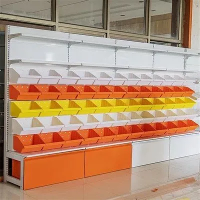
It’s not a dumb question, either. Single-side shelves are specific—they line walls, fit tight corners, hold things like cereal, sauces, cleaning supplies, or even those random little impulse buys by the checkout that don’t need to be accessible from both sides. If you grab the wrong kind, you’re either wasting space, dealing with flimsy units that break after 6 months, or spending way more than you need to. Let me walk you through the best places to look, what to watch for, and why going with a reliable supplier (hi, that’s me!) beats random big-box stores or sketchy online marketplaces.
First off, let’s get the basics: what makes a single-side supermarket shelf different from other kinds? Unlike double-sided units that sit in the middle of aisles so shoppers can browse from both directions, single-side ones are designed to mount against walls. That means they’re built with a deeper back plate, sturdier anchor points, and often adjustable levels so you can tweak them for tall jars or narrow snack bags. I’ve seen store owners grab generic shelf units from a hardware store, drill them into the wall, and then have them tip because they weren’t made for heavy retail use. Not a good look—especially when you have full shelves of 2-liter sodas or big bags of rice.
Now, where do you actually find these things? Let’s start with the most obvious spot that’s also a total hidden gem if you know where to look: specialized retail shelving suppliers. Not the big box stores that sell a random shelf here and there for your garage, not the random Facebook marketplace seller offloading a used unit from a closed store (unless you check it super carefully), but actual companies that make and sell supermarket shelving full-time. A lot of these guys have online stores with specific categories, which makes it easy to filter for exactly what you need.
For example, when I first started out, I relied on sites that had dedicated sections for wall-mounted retail shelving. If you’re scrolling for single-side units, don’t waste time clicking around “office storage” or “garage shelves.” Look for sites that label their stuff by retail type—like supermarket or grocery store gear. One of the best places I can point you to is a site that has a whole line of single-side options under their wall shelving collection; you’ll even see them paired with matching accessories like price tag holders or shelf dividers, which saves you the hassle of ordering separate stuff later. Wait, actually, here’s a direct link to one of their top single-side wall lines: Superstore Retail Shelving. They make units in different heights, lengths, and weight capacities, so you can pick exactly what fits your store’s layout. No more measuring wrong and ending up with a shelf that’s too short for your wall space.
Another route: if you’re in the U.S. and don’t mind checking local used store inventories, there are tons of liquidation companies that sell shelving from closed supermarkets. But fair warning—buying used single-side shelves can be a gamble. Some might have dented frames, missing bolts, or shelves that are warped from being overloaded with heavy products. I’ve had customers come to me after buying used, only to find that the wall brackets didn’t fit their building’s studs, so they had to drill extra holes or even replace parts. That ends up costing you more in the long run, right? Unless you’re super handy and have time to fix issues, new is usually better for single-side units because you can get a warranty.
Online marketplaces like Amazon or Alibaba? Let’s be honest, those are hit or miss. On Amazon, you’ll find generic “wall shelves” that look similar to single-side supermarket ones, but they’re usually made of cheap particleboard or thin metal that can’t hold much weight. I’ve heard stories of store owners putting a case of water on a shelf from Amazon and it bending in half. Alibaba is even trickier—you’re dealing with international suppliers who might ship units that don’t meet U.S. safety standards, or take months to deliver if you order a custom size. Sure, you might get a cheap price upfront, but the risks aren’t worth it for something you use every day in your store.
Wait, let’s also talk about grocery store gondola shelving, because some people mix that up with single-side. Gondola units are usually the double-sided ones in the middle of aisles, right? But wait a second—there’s a type of gondola that’s single-side? No, actually, most gondolas are double-sided, but some suppliers make single-side wall units that match their gondola lines so your whole store has a consistent look. That’s a big deal for brand cohesion. If you have all your middle aisles with matching gondola shelving, your wall shelves should look like they belong too, not random mismatched units. If you check out this grocery store gondola shelving link, you can see how those look, and then match your single-side units to the same style. It’s a small detail, but shoppers notice when a store feels put-together.
Another factor to consider: what material do you want for your single-side shelf? Most people go with all steel, because it’s durable, easy to wipe down (super important for grocery stores with spills), and doesn’t warp. But some places offer steel wood supermarket shelves, which mix a steel frame with wooden shelves. Those look nicer for smaller stores or convenience shops that want a warmer, less industrial vibe. Just keep in mind: wood shelves can get stained easier if you have leaks or soda spills, so you’ll have to replace them more often. All steel is a better long-term investment for high-traffic grocery spaces.
Now, let’s get into what I tell every customer when they ask where to buy single-side units: ask the supplier if they do custom sizes. A lot of store owners have weird wall spaces—like a narrow nook by the entry, or a wide empty wall at the back that needs more than a standard 4-foot shelf. Generic units are only so useful if your space is unique. A good supplier will work with you to make a shelf that’s exactly the length and height you need, not force you to squeeze a standard piece into a spot that’s too small. Also, check if they include installation hardware. Some cheap sellers will send you a shelf and expect you to buy wall anchors or brackets separately, which adds to your cost. A reliable supplier includes all the stuff you need to mount it, so you can just get a drill and get to work.
I’ve had customers come to me saying they tried to save money by buying from a random online seller, but then the brackets were too weak, so the shelves kept wobbling. Or they ordered the wrong height, so they had empty space at the top that they couldn’t use. That’s why going with a specialized retail shelving supplier is way better. We know supermarket layouts, we know what works for heavy product loads, and we have a huge range of options for single-side units. Let’s break down a few key features to look for when you’re shopping:
First, weight capacity. A single-side shelf for wall mounting needs to hold at least 100 pounds per level, right? Because you’re going to put full cases of soda, bags of dog food, or big jars of pickles on there. If a shelf says it only holds 50 pounds, that’s a party trick, not a functional store shelf. All the units I sell for single-side use are rated for 150 pounds per level, so you never have to worry about them collapsing mid-shift.
Second, adjustability. Being able to move the shelves up and down means you can adapt to different products. If you get a lot of tall snack boxes, you can crank the shelves higher. If you have small condiment bottles, lower them to use the space better. A good single-side shelf will have slotted holes every 2 inches or so, so you have tons of flexibility. No more dealing with fixed shelves that either leave big gaps or are too low for what you need.
Third, warranty. I stand behind all my shelves—any defect in material or workmanship, I’ll fix or replace it, no questions asked. A lot of cheap online sellers don’t offer any warranty, so if a shelf breaks a month after you install it, you’re out hundreds of dollars. That’s not a risk you want to take for your store’s main display areas.
Wait, let’s circle back to the links I mentioned earlier, because they’re all from a reputable supplier I trust (and honestly, it’s the same company I used when I first started out). The Superstore Retail Shelving link is their main line of commercial single-side supermarket shelves—these are the workhorses, great for most grocery stores. The grocery store gondola shelving link is for their double-sided gondolas, but if you want matching single-side wall shelves, they have units that fit the same finish and design. The Steel Wood Supermarket Shelves link is if you want that mix of steel and wood, which works for smaller convenience stores or gourmet markets where looks matter a little more than maximum weight capacity. And the Double-side Supermarket Shelf link is there if you ever decide you need middle aisle units later—same brand, so you can mix and match with your single-side walls. Oh, and the Grocery Store Display Racks link has all the extra stuff you might need: price tag holders, shelf dividers, end caps, anything to make your single-side shelves work better for your products.
Now, let’s talk about common mistakes I see people make when buying single-side shelves. First, measuring wrong. They’ll measure the length of the wall, but forget that the shelf has a back plate that sticks out, or that they need clearance for the door or a light switch. Always measure twice, and then add an inch or two of extra space, just in case. Second, not checking if their walls can support the shelf. Drywall alone can’t hold a 100-pound shelf—you need to mount it to wall studs. A good supplier will tell you that, and even give you tips on how to find studs. Third, buying too many or too few. Don’t just order shelves for one wall—plan your whole store layout first. Map out where each product is going, how much space you need between aisles, and how many shelves you’ll need total. That way you don’t have to make a second order, which costs more in shipping and delays your opening.
Another thing: used vs new. I get that budget is a big deal, especially if you’re a new store owner just starting out. But let’s be real, a used shelf that’s dented and missing parts is not a budget win. It’ll end up costing you more in repairs, and it won’t last as long. If you’re really tight on cash, look for a supplier that has scratch-and-dent new units—sometimes a shelf has a tiny scratch that you can’t even see once it’s mounted, but it’s marked down 20 or 30 percent. That’s a happy middle ground between cheap used and full-price new.
At the end of the day, the best place to buy a single-side supermarket shelf is from a supplier that specializes in retail and supermarket equipment, not a general home goods store. These guys know exactly what you need, they can help you pick the right size, weight, and style, and they’ll support you after you buy it. I’ve been in this long enough to know that skimping on shelving is one of the biggest mistakes a new store owner can make. A good single-side shelf doesn’t just hold your products—it makes them easy for shoppers to find, keeps your store organized, and saves you time on maintenance.
If you’re still not sure what kind of single-side shelf you need, reach out to a supplier that actually has experience with supermarket layouts. Don’t be shy—tell them the size of your wall, what kind of products you’ll be putting on it, and your budget. A good rep will ask you questions, offer recommendations, and even help you design a layout that works for your space. I always tell my customers that there’s no such thing as a stupid question when it comes to outfitting your store. You’re investing in your business, so you should feel confident that the shelves you buy will last for years and help you make money.
So to wrap this up: skip the big box stores, skip the random Facebook marketplace sellers, skip the international Alibaba sites with no reviews. Go with a specialized retail shelving supplier, check out their dedicated single-side supermarket shelves (like the ones linked here via Superstore Retail Shelving), make sure they offer adjustability, weight capacity, and a warranty, and don’t be afraid to ask for custom sizes if your space is weird. It’s the easiest way to get exactly what you need, without the headaches.
If you’re ready to look at options or have questions about what works for your store, don’t hesitate to reach out to a reliable supplier. They can walk you through every step, from measuring to delivery, so you can get your store up and running without the stress.
References
- Commercial Retail Shelving Industry Guide, 2023, Retail Equipment Association
- Supermarket Layout and Shelving Best Practices, 2022, Grocery Management Magazine
- Wall-Mounted Shelf Safety Standards for Commercial Spaces, 2021, Occupational Safety and Health Administration (OSHA)