


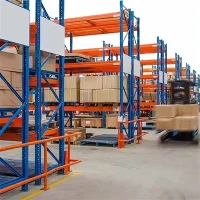


If you've ever walked into a warehouse and noticed a rusty, chipped steel rack holding pallets, you know how big of a problem bad coating can be. I've been selling warehouse steel storage racks for over 12 years now, and I can't tell you how many clients come to me saying "my old racks are falling apart" just because they picked the wrong coating years ago. Coating isn't just about making racks look pretty – it's the first line of defense against corrosion, impact, and all the chaos that goes on in a busy warehouse. So, let's break down how to pick the right coating for your racks, no matter if you're using light-duty shelf units or heavy-duty industrial systems.
First off, you need to get real about your warehouse's environment. Not every space is the same, and that changes everything. Let's say you're running a standard dry warehouse – no extreme temperatures, no moisture, just regular stuff storage. That's one thing. But if you're storing food or pharmaceuticals, you have to care about cleanliness. If you're in a place with high humidity or near the coast (salt air is a killer), corrosion becomes the main enemy. And if you have forklifts zooming around and pallets slamming into racks daily, impact resistance is non-negotiable. I once had a client who stored outdoor construction materials in a standard dry-warehouse rack coating – within 6 months, half the racks had rust spots, and they had to replace a third of them. Total waste of money, right?
Wait, let's start with the main coating types because that's where most people get confused. The big ones are powder coating, electroplating, hot-dip galvanizing, and wet paint. Each has its place, and picking the wrong one will cost you down the line. Powder coating is probably the most popular these days, and for good reason. It's a dry powder applied electrostatically, then baked on – it forms a hard, smooth finish that's way more durable than wet paint. It's also eco-friendly because there's almost no volatile organic compounds (VOCs) compared to wet paint. But here's the thing: powder coating works best for indoor or mild outdoor use. If you're in a super humid area, you might need a thicker powder coat, not the standard 60-80 microns. I always recommend powder coating for most of my clients' racks, whether it's the Industrial storage racking systems or the Racks for Warehouse Shelf – it holds up great when applied right.
Electroplating is another option, but it's mostly for small parts, not full racks. It uses a thin metal layer (like zinc) to prevent corrosion. The problem here is that it's not tough against impact – if a forklift hits the rack, the plating chips off, leaving the steel exposed and prone to rust. I only suggest electroplating for tiny rack accessories, like bolts or hooks, never for the main rack structure. So if you're looking at heavy-duty industrial racking systems that get a lot of traffic, skip electroplating.
Hot-dip galvanizing is the go-to for super harsh environments. You dip steel racks into molten zinc, so the zinc bonds all the way through, not just on the surface. It's way thicker than powder coating – like 85+ microns – and it can handle salt air, rain, and even rough outdoor conditions. I've used this for clients who store building materials outside, and after 5 years, those racks look almost new. But here's the catch: galvanizing gives a rough, gray finish, so if looks matter (like for a retail warehouse that clients visit), this might not be the best pick. Also, it's more expensive upfront than standard powder coating, but it saves you money in the long run because it doesn't rust.
Wet paint? I never recommend it for warehouse racks. It's cheaper initially, but it chips easily, fades fast, and has lots of VOCs that are bad for air quality. Most places don't even allow wet paint in warehouses now because of the fumes. I once had a small business owner beg me to use wet paint for his light-duty shelf units to save a few bucks – a year later, he called me panicking because the paint was peeling and his workers were complaining about headaches from the fumes. So just skip wet paint entirely for storage racks.
Now, let's talk about specific factors that should guide your choice, not just the coating type. First up is load capacity and rack type. If you're buying Heavy Duty Pallet Rack System for storing super heavy pallets (like 10,000 lbs each), you need a coating that can handle both the weight of the pallets and the impact of forklifts. Powder coating with a primer is great here – the primer adds an extra layer of protection under the finish, so even if a pallet bumps the rack, the finish doesn't chip through to the steel. For Cantilever Racks For Sale that hold long items like pipes or lumber, you'll want a coating that's flexible too, because cantilevers bend a little when loaded, and a brittle coating would crack. I always make sure the powder coat for cantilevers is flexible enough to handle that bending without cracking.
Next is cleanliness requirements. If you're in the food and beverage industry, or a medical warehouse, you need a coating that's easy to clean and doesn't shed particles. Powder coating is perfect here – it's non-porous, so you can wipe it down with cleaners without it absorbing gunk or leaving behind residues. Galvanizing is also non-porous, but the rough texture can trap dirt if you're not careful. Electroplating isn't used for full racks here because it's too thin and can chip, so powder coating is your best bet if cleanliness is key.
Environmental conditions are huge, like I mentioned earlier. Let's break it down:
- Dry indoor warehouse: Standard powder coating works fine. You can go with the 60-80 micron thickness, which is the sweet spot for most indoor use.
- High humidity or moderate outdoor: Go with a thicker powder coat (80-100 microns) or a powder coat with a zinc-rich primer. That extra thickness blocks moisture from getting to the steel.
- Coastal or heavy outdoor (salt air, rain): Hot-dip galvanizing is your only real option here. Salt air eats through regular coatings like crazy, so the zinc layer in galvanizing acts as a sacrificial barrier – if any part of the coating gets scratched, the zinc will corrode instead of the steel.
- Extreme temperatures (like freezers or ovens): If you're in a cold storage warehouse, the coating has to handle freezing temps. Regular powder coating can get brittle in low temps and crack, so you need a low-temperature powder coat that stays flexible. For heat, like a warehouse near a furnace, make sure the coating is heat-resistant (like 200°C or higher) so it doesn't bubble or peel.
Impact resistance is another big one. Forklift collisions, pallets being dropped, workers banging things – all that adds up. Powder coating is harder than wet paint, but some powder coats are more impact-resistant than others. Polyester powder coats are the most durable for impact, right between epoxy and acrylic. Epoxy is more corrosion-resistant but less impact-resistant, and acrylic holds up to UV light better. So if your racks get hit a lot, go with a polyester powder coat – it's the middle ground that handles impact and corrosion. I always test small pieces with clients before coating full racks, just to make sure the impact is where it needs to be.
Cost is always a factor, but you have to look at long-term cost, not just upfront. Hot-dip galvanizing is the most expensive upfront – usually 20-30% more than standard powder coating. But if your warehouse is in a harsh environment, and you didn't pick galvanizing, you'll be replacing racks every 2-3 years, which ends up costing way more. Powder coating is cheaper upfront, and lasts 8-10 years on average in good conditions, so that's a solid middle option. Electroplating is cheap but only for small parts, not full racks. Wet paint is the cheapest upfront but lasts less than 3 years and has extra costs for fume removal or cleaning.
Wait, also important: proper surface preparation. No matter what coating you pick, if you don't prep the steel right, it's going to fail. You can put the fanciest powder coat on dirty, rusty steel, and it will chip and rust within months. Surface preparation means cleaning the steel to remove oil, grease, and dirt, then blasting it with sand or another material to make it rough so the coating adheres. I always make sure my clients know that even if they pick the right coating, bad prep ruins everything. That's a mistake I see all the time – they focus on the coating type and skip the prep, and wonder why their racks are falling apart.
Let's throw in some real examples, from clients I've worked with, to make this real. First, a food warehouse in Chicago: they had old wet-painted racks that were peeling and getting food residues stuck in the cracks. We switched them to medium-duty Industrial storage racking systems with a 80-micron polyester powder coat, and added a food-safe epoxy primer. Two years later, they told me it was way easier to clean, no peeling, and their food safety inspections passed with no issues. Second example: a construction company in Florida, right near the coast, storing lumber and pipes outside. They tried standard powder coating for their Racks for Warehouse Shelf and Cantilever Racks For Sale, and within a year, the salt air had rust spots on the beams. We switched them to hot-dip galvanizing for their Heavy Duty Industrial Racking Systems, and after 4 years, those racks still look like new, no rust. Another client: a cold storage warehouse in Minnesota, where temps drop to -20°F in winter. They had racks with regular powder coating that cracked when forklifts hit them. We switched them to a low-temperature flexible powder coat, and now they haven't had any cracking issues in 3 years.
Now, common mistakes to avoid. First, picking a coating based only on price, not environment. That Florida construction company I mentioned earlier – they saved $5,000 upfront by going with powder instead of galvanizing, but they spent $15,000 replacing racks a year later. Second, not considering impact needs. If you run a busy warehouse with forklifts, a thin powder coat isn't going to cut it. Third, skipping surface prep – this is the most avoidable mistake. I once worked with a small online retailer that bought cheap racks from another supplier, who didn't prep the steel. Within 6 months, the coating was peeling all over, and they had to throw away half their racks. Fourth, not matching the coating to the rack type. Cantilever racks are different from pallet racks – cantilevers flex, so they need a more flexible coating. Heavy-duty pallet racks get hit more, so they need a harder, thicker coating.


So, let's wrap this up. At the end of the day, selecting the right coating for your warehouse steel racks comes down to being honest about your warehouse's specific conditions. Ask yourself: what's my environment like (dry, humid, coastal, cold)? How much impact do my racks take daily? Are there cleanliness rules I have to follow? What's my long-term budget? Once you answer those, you can pick the right coating type: standard powder for mild indoor, thickened or zinc-rich powder for moderate conditions, galvanizing for harsh outdoor/coastal, and skip wet paint or electroplating for full racks.
If you're still not sure which coating is right for your racks – whether you need a Heavy Duty Pallet Rack System or some Racks for Warehouse Shelf – feel free to reach out. I've helped hundreds of warehouse owners pick the right coating for their needs, no pressure, just straight talk. We can even send you sample coated pieces so you can test impact and resistance in your own warehouse.