



Hey there! If you've ever walked down a supermarket aisle or popped into your local corner store, chances is you've stared at a shop rack without even noticing one tiny but super important part holding it all together: the cross-beam. As someone who's been in the shop rack supply game for years, I can't tell you how many times I've talked to store owners, managers, or even part-time stockers who brush off cross-beams as just "extra metal." Nah, that couldn't be further from the truth. These little guys are unsung heroes of retail storage, and understanding their role can totally change how you set up, stock, or even upgrade your store. Let's break this down like we would over a coffee at a warehouse break room-no fancy jargon, just real talk.
First off, let's set the scene. When you walk into a store, what do you see? Neat stacks of cereal, rows of canned soup, fancy snack bars at eye level. All that stuff's on shop racks, right? And if you've ever tried stacking 20 cans of beans on a flimsy shelf, you know it tilts, sags, or even falls if it's not built right. That's where cross-beams come in. They're those metal bars that run horizontally between the vertical posts of a shop rack, right under where the shelf sits. Wait, but why not just use the shelf itself to hold the weight? Because shelves are designed to hold products, not distribute weight evenly. Let's be real-when you've got a pallet of water bottles (the heavy kind, 24 bottles each) or cases of soda on a shelf, that shelf's got to hold that load without bending. Cross-beams act like the backbone under that shelf, spreading the weight from the middle of the shelf all the way out to the vertical posts. I've seen so many stores skip adding extra cross-beams and end up with sagging shelves, broken products, and even safety issues-no fun for anyone.
Now, let's get specific about the science (but keep it simple, promise). Every material has a load capacity, right? Metal shelves, even the good steel ones, have a "max weight" they can handle before they start to deform. Cross-beams boost that capacity by creating a rigid frame. Think of a door-if you just have a flat panel, it bends, but add those vertical and horizontal beams around the edge, it's solid. Same exact idea here. For example, if a shelf alone can hold 150 lbs, adding one cross-beam under the middle might bump that up to 250 lbs. Add two cross-beams, one at each end and one in the middle, and suddenly you're at 400 lbs. That's a game-changer for stores that stock heavy items like cleaning supplies, pet food, or bulk grains. I always tell my clients, "Don't cut corners on cross-beams-they're the reason you don't have to mop up spilt cereal every Tuesday."
But weight capacity isn't the only job cross-beams do. They also keep the shelves level, which is huge for product display. If a shelf is tilting because there's no cross-beam to support it, all the products on the high side slide to the low side, making a messy display. Customers hate messy displays-they can't find what they want, and it makes the store look unprofessional. I've heard from a grocery store owner in Ohio who switched from one cross-beam per shelf to three (for their heavy canned goods aisle) and saw a 12% drop in product damage and a noticeable improvement in how their displays looked. That's not just a number-it's real results. And if you're dealing with smaller products, like candy or lip balm, a level shelf means nothing rolls off and gets lost under the rack, so you're not losing sales to lost inventory.
Wait, another big one: safety. I can't stress this enough. A sagging shelf that's holding 50 lbs of glass jars? It's going to break eventually, and when it does, glass shards everywhere, not to mention the risk of someone tripping over fallen jars. Cross-beams prevent that by keeping the shelf structurally sound. I remember a few years back, a local convenience store called me in because one of their snack shelves collapsed during a restock-turns out they'd removed the cross-beams to make more space for big bags of chips. Total mistake, and they had to throw out hundreds of dollars' worth of chips, plus pay to fix the rack. That's a avoidable cost, all because they didn't understand the cross-beam's role. It's not just about storing stuff-it's about keeping your team, your customers, and your inventory safe.
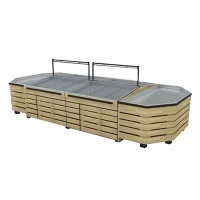
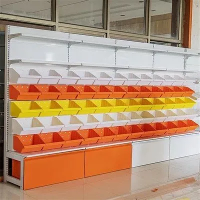
Now, let's tie this to the actual shop rack products I supply, because that's what you're here for, right? If you're looking for quality shop racks that get the cross-beam part right, check out Steel Wood Supermarket Shelves - those come with adjustable cross-beams that fit their steel shelves perfectly, so you can tweak the height and number of beams based on what you're stocking. For stores with limited space, Double-side Supermarket Shelf units use cross-beams on both sides to support shelves that hold products from two directions, which is great for aisles where you've got customers on both sides. And if you're into display-focused setups, Grocery Store Display Racks have reinforced cross-beams to keep decorative items (like gift baskets or seasonal decor) looking sharp, no sagging. Even if you just need basic, reliable racks, Display Supermarket Racks come with standard cross-beams that meet all safety codes, so you don't have to worry about cutting corners. And if you want to browse all the options in one place, shelf display supermarket is your go-to page-you'll see how cross-beams are engineered into every design, not just an afterthought.
Wait, let's talk about customization, because not every store is the same. A corner bodega might need lighter cross-beams for their snack shelves, while a big-box grocery store needs heavy-duty cross-beams for their bulk sections. Cross-beams are adjustable, right? Most shop racks let you move cross-beams up and down the vertical posts, so you can space them out where you need the most support. For example, if you have a shelf holding light items like greeting cards, you only need one cross-beam. If you're stacking cases of water, you need two, maybe even three. I work with each client to figure out their exact needs-we look at what they stock, how much space they have, even how often they restock-to make sure their cross-beam setup is spot-on. That's the kind of personalized service you don't get from big box stores, and it makes all the difference in how your store runs.
Another thing I've noticed over the years: cross-beams also extend the lifespan of your shop racks. If you skip cross-beams, the shelves and vertical posts take all the weight, which can cause them to bend or rust faster. Cross-beams distribute that weight, so the main parts of the rack don't wear out as quickly. That means you don't have to replace your shop racks every few years-saving you money in the long run. I've had clients who bought racks with our reinforced cross-beams 8 years ago, and they're still going strong, no sagging, no rusty posts. Compare that to a client who bought cheaper racks without proper cross-beams, had to replace them in 3 years. It's a small investment that pays off big time.


Let's not forget about assembly. Wait, some people think cross-beams are just extra parts to put together, but no-good cross-beams are designed for easy installation, even if you're not a handyman. All our shop racks, including the ones in the links I mentioned, come with tool-less cross-beams that clip right into the vertical posts, so you don't need a drill or special tools. That's a huge win for small store owners who might be assembling the racks themselves, not a professional. I've had a bakery owner put together Grocery Store Display Racks in an hour, cross-beams and all, and they told me it was way simpler than they thought. No frustration, no missing parts-just solid cross-beams holding everything in place.
Now, let's circle back to why this matters for your store. At the end of the day, retail is all about customer experience. If your shelves are sagging, products are sliding, or you've got broken inventory, customers will notice, and they'll go to the store down the street that's more put-together. Cross-beams might seem like a tiny, invisible part of your shop rack, but they're the foundation of a functional, safe, and attractive store. Whether you're setting up a new store, upgrading your current shelves, or just fixing a problem aisle, paying attention to cross-beams is key.
If you're in the market for new shop racks or want to upgrade your current ones with better cross-beam setups, I'm here to help. We work with stores of all sizes-from small local bodegas to large supermarket chains-to find the right racks that fit your budget, your products, and your space. We've got the options linked here, but we can also customize things if you have specific needs. Just reach out to start a chat about your store's needs, and we'll help you figure out the perfect cross-beam and rack setup that works for you.