


Increasing warehouse rack height is one way to create more storage positions without expanding the building's floor area. However, taller racks do not automatically mean better warehouse utilization. The additional levels must be reachable by the available handling equipment, suitable for the stored products, and practical for daily picking and replenishment.
For warehouse operators planning a new storage system or upgrading existing warehouse racks, the important question is not simply how high the racks can be built. It is how much of the available vertical space can be converted into usable storage without slowing down warehouse operations.
1. Rack Height Determines How Many Storage Levels Can Fit
The most direct effect of warehouse rack height is the number of storage levels available.
Consider a warehouse with the same floor layout and rack configuration. If the rack height increases enough to accommodate another beam level, the number of pallet positions can increase without adding another rack row.
However, each level needs more vertical space than the height of the product alone. For pallet racking, the calculation must account for:
Pallet height
Loaded product height
Beam depth
Clearance required to lift and position the pallet
Clearance above the highest stored load
For example, if a loaded pallet is approximately 1,400 mm high, the vertical space required for one storage level will be greater than 1,400 mm. The forklift needs room to lift the pallet clear of the beam before placing or removing it.
This is why rack levels should be planned around actual pallet dimensions rather than dividing the building height into equal sections.
A warehouse storing products with consistent pallet heights may be able to use its vertical space more efficiently than one handling many different load heights. If a few unusually tall products determine the spacing of every level, valuable space may be wasted across the entire rack row.
2. Building Clear Height Is Not the Same as Usable Rack Height
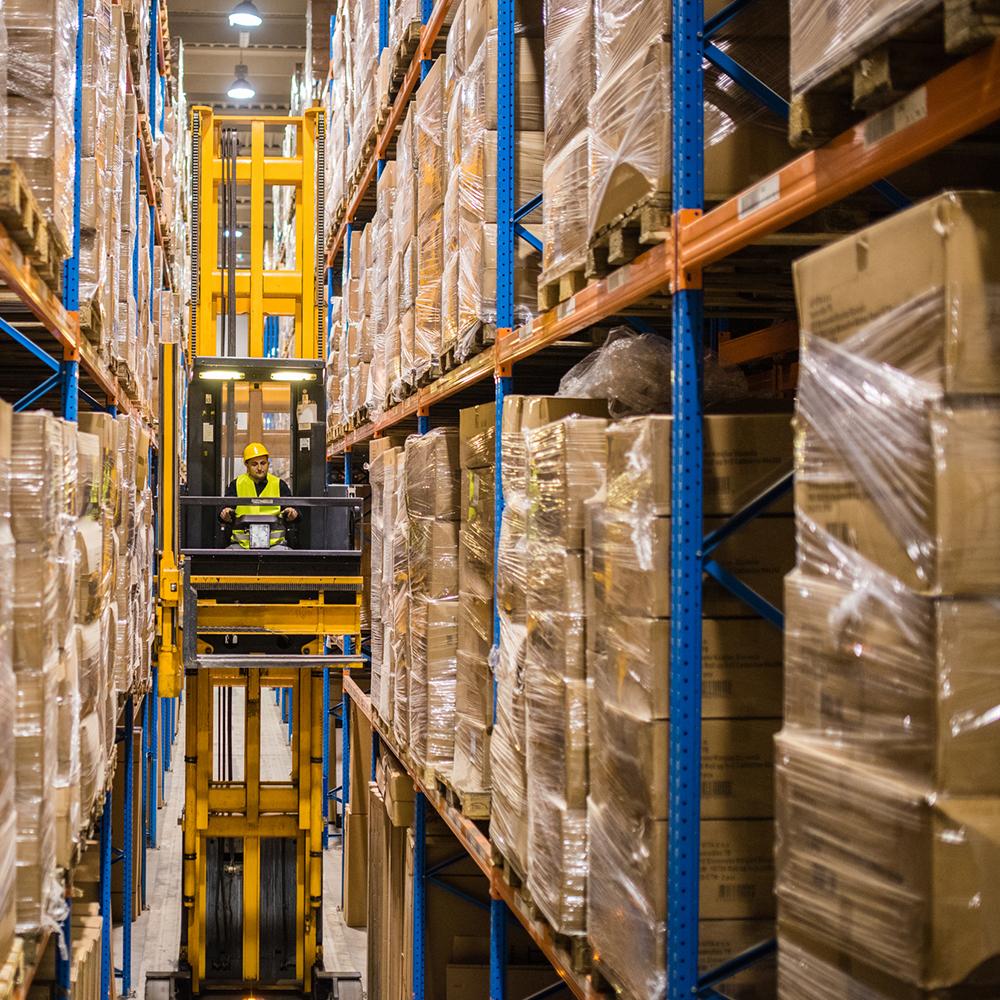
A warehouse may have a high ceiling, but not all of that vertical space is available for storage.
The usable height can be restricted by:
Roof beams and structural bracing
Sprinkler pipes and sprinkler heads
Lighting fixtures
Ventilation ducts and cable trays
Overhead doors and other building equipment
Fire protection and local building requirements
The lowest relevant obstruction in a storage area may determine the maximum practical rack height for that zone.
This becomes particularly important in warehouses where the roof structure is uneven. The center of the building may offer more vertical clearance than the perimeter, or a ventilation duct may pass directly above one proposed rack row.
Before selecting warehouse rack height, measure the actual clear height across the storage area. Do not rely only on the building's nominal ceiling height.
The highest stored load must also maintain the clearance required by the approved fire protection design. A rack should never be extended simply because there appears to be empty space above the top beam.
3. Taller Racks Can Increase Capacity, but Only If the Equipment Can Reach Them
The handling equipment is one of the main factors limiting warehouse rack height.
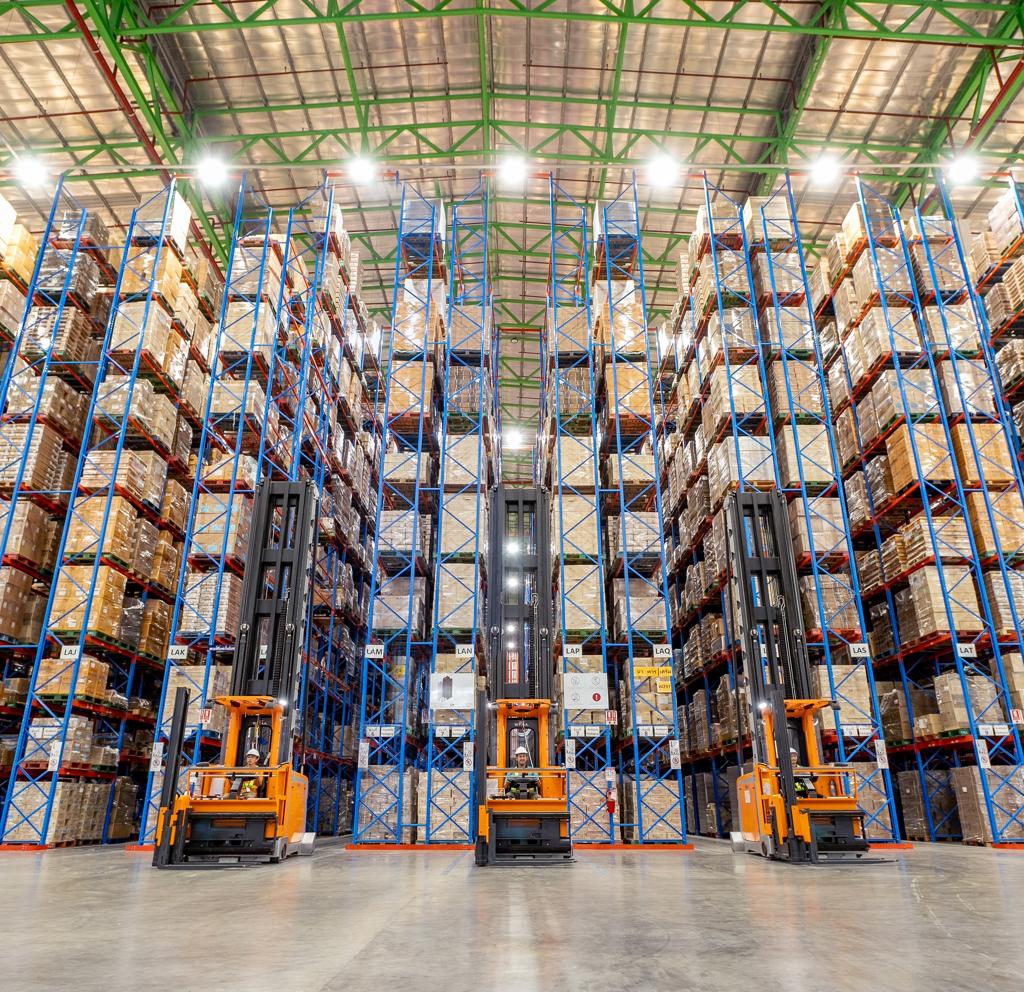
A standard counterbalance forklift, a reach truck, and a very narrow aisle (VNA) truck do not have the same operating requirements. Their lifting height, mast configuration, load capacity at elevation, and aisle requirements are different.
For example, a warehouse may install an additional upper beam level, but the existing forklift may not be able to place the loaded pallet there safely. Even if the mast can physically reach the required height, the forklift's remaining lifting capacity at that elevation must be checked.
When evaluating a taller warehouse racking system, confirm:
The maximum lifting height of the selected truck.
Its rated capacity at the actual load center and lifting height.
The mast height and overhead clearance required during operation.
Whether the truck can enter, turn, and position pallets in the proposed aisles.
Whether operators have adequate visibility when handling upper-level loads.
A common purchasing mistake is to select the rack first and check the forklift afterward. In practice, the rack height and handling equipment should be planned together.
If a warehouse wants to use substantially more vertical space, it may need reach trucks, VNA equipment, or an automated storage and retrieval system (AS/RS). These options can increase storage density, but they also introduce equipment costs, operating requirements, and layout constraints.
4. Rack Height Also Changes Product Accessibility
Storage capacity is only one side of warehouse performance. The other is how easily employees can retrieve the products they need.
Not every product should be stored at the highest available level.
Fast-moving products are generally better positioned where they can be picked or replenished efficiently. Slower-moving inventory, reserve stock, and products that are handled less frequently may be more suitable for upper levels, provided the handling equipment can access them safely.
A practical warehouse arrangement might use:
Lower levels for frequently picked products or goods that need convenient access.
Middle levels for regular inventory movement.
Upper levels for reserve pallets or slower-moving products.
This arrangement separates daily picking from bulk storage. Employees can access frequently requested products without repeatedly using forklifts to retrieve pallets from the highest levels.
For warehouses with mixed inventory, it is also worth considering the product's weight and dimensions. Heavy products should not be assigned to upper levels simply because those positions are available. Their storage location must follow the rack design, load ratings, equipment capability, and safe handling procedures.
The objective is to make high-level storage useful without making everyday picking unnecessarily complicated.
5. More Storage Levels May Increase Handling Time
Adding another beam level can increase the number of pallet positions, but it may also change how long each storage and retrieval task takes.
A forklift operator generally needs to travel to the correct aisle, position the truck, raise the load, align the pallet with the beam level, and complete the placement or retrieval. Higher storage positions can require more lifting time and more precise positioning.
The effect becomes more noticeable when a large proportion of daily orders involves upper-level inventory.
For example, compare two warehouse arrangements:
Arrangement A: More upper-level storage
The warehouse uses additional rack levels to increase the total number of pallet positions. However, many fast-moving products are stored high, so operators frequently need to retrieve pallets from upper levels.
Arrangement B: Storage organized by picking frequency
Fast-moving products are kept at convenient lower levels, while reserve inventory is stored higher. Operators retrieve upper-level pallets mainly for replenishment.
Arrangement B may have fewer immediately convenient storage positions, but it can reduce unnecessary high-level handling during daily order picking.
This is why warehouse rack height should be considered together with inventory turnover, order frequency, and replenishment procedures.
6. Aisle Width and Rack Height Must Be Planned Together
Warehouse storage capacity is affected by both vertical and horizontal space.
Increasing rack height may add storage levels, but the handling equipment required to access those levels can also influence aisle width.
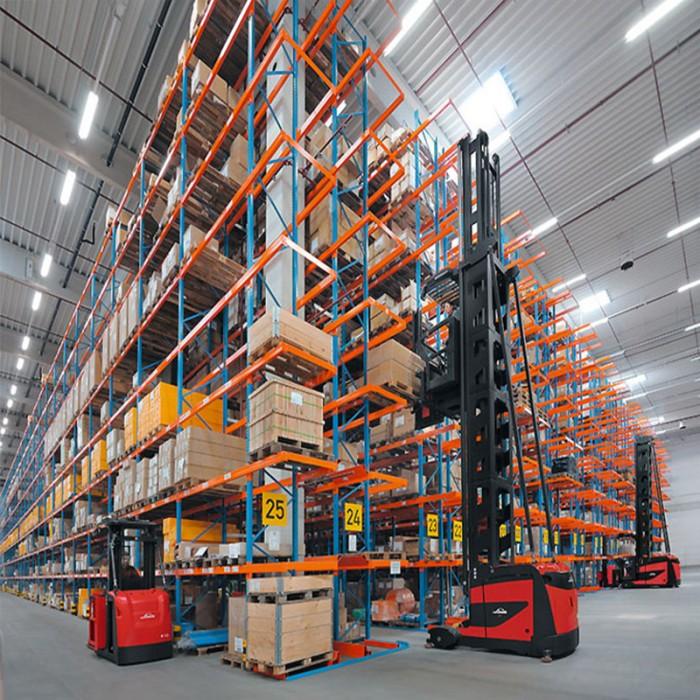
For example, a conventional forklift and a VNA truck have different aisle requirements. A VNA system can allow more rack rows within the same floor area, but it requires specialized equipment and a layout designed around its operating method.
The trade-off is important:
Wider aisles generally provide more room for conventional equipment and movement.
Narrower aisles may allow more rack rows, but require compatible handling equipment and tighter operating control.
Taller racks increase vertical storage positions, but require equipment capable of reaching the upper levels.
Do not try to maximize rack height and minimize aisle width independently. A layout that looks efficient on paper may create slow or difficult pallet handling in actual operation.
The handling equipment should be selected before finalizing the rack layout, not after installation.
7. When Is Increasing Warehouse Rack Height Worth It?
Increasing rack height is worth considering when the warehouse has sufficient clear height, the current floor area is already heavily used, and the handling equipment can safely service additional levels.
It is particularly useful when:
The warehouse has unused vertical space above existing racks.
Products have relatively consistent pallet heights.
Inventory can be divided between picking stock and reserve stock.
The existing handling equipment can reach the proposed storage levels, or an equipment upgrade is economically justified.
The building floor and rack structure can support the proposed system.
However, a taller rack may not be the best solution in every warehouse.
If most orders require frequent access to individual cartons, adding high pallet levels may not solve the main operational problem. If the warehouse has limited clear height because of sprinklers or building services, the additional storage positions may be too few to justify the project cost.
Similarly, if the existing forklift cannot safely handle the required loads at greater heights, changing the rack alone will not increase usable capacity.
Before upgrading, compare the additional usable pallet positions with the cost of new racks, equipment, installation, and any required building or fire protection changes.
8. What Information Is Needed to Select the Right Rack Height?
A warehouse rack supplier needs more than the building's ceiling height to recommend a suitable system.
Prepare the following information before requesting a quotation:
| Information | Why It Matters |
|---|---|
| Building clear height | Establishes the available vertical storage envelope |
| Lowest overhead obstruction | Identifies restrictions caused by beams, sprinklers, or services |
| Pallet dimensions | Determines rack depth and pallet position arrangement |
| Maximum loaded pallet height | Helps establish beam-level spacing |
| Maximum pallet weight | Affects beam and upright frame design |
| Forklift or reach truck model | Confirms lifting height, residual capacity, and aisle requirements |
| Number of SKUs and pallet quantities | Helps determine storage layout and accessibility needs |
| Picking frequency | Helps decide which products should occupy lower or upper levels |
For an existing warehouse, provide photographs of the roof structure, sprinkler arrangement, current racks, and handling equipment where possible. These details can help identify constraints before the rack configuration is finalized.
Any change to an existing rack system, such as adding beam levels or increasing rack height, should be reviewed by the rack designer or a qualified engineer. The original load rating cannot automatically be assumed to remain valid after structural changes.
Frequently Asked Questions
Does taller warehouse racking always increase storage capacity?
Not necessarily. Taller racking can provide more storage levels, but the additional positions must fit below building and fire protection restrictions and remain accessible to the available handling equipment. Only usable storage positions should be counted as added capacity.
How do I determine the right height for warehouse racks?
Start with the building's actual clear height, including the lowest overhead obstructions. Then consider pallet height, beam spacing, handling clearance, forklift lifting capability, rack design, and applicable safety requirements.
How does rack height affect forklift selection?
Higher rack levels require greater lifting capability. However, maximum lift height alone is not enough. The forklift must also retain sufficient capacity for the actual load at the required lifting height and load center.
Should fast-moving products be stored on upper rack levels?
Usually, frequently picked products are better positioned at accessible lower levels. Upper levels can be used for reserve inventory or slower-moving products, reducing the need for repeated high-level retrieval during daily operations.
Can I add another beam level to an existing warehouse rack?
Possibly, but the change must be checked against the rack's structural design, beam and upright capacities, load arrangement, and operating clearances. Adding a beam level does not automatically mean the original rack load rating remains valid.
What is the difference between rack height and storage height?
Rack height refers to the overall height of the rack structure. Storage height refers to the usable vertical space available for the stored products. The highest stored load may sit below the top of the rack because of beam arrangement, handling clearance, and fire protection requirements.
The Right Rack Height Is the Height Your Warehouse Can Actually Use
A warehouse should not be designed around the tallest rack that can physically fit inside the building. It should be designed around the storage positions that can be safely loaded, retrieved, and managed in daily operations.
For warehouse operators, the best result comes from matching rack height with pallet dimensions, handling equipment, inventory turnover, and building conditions. This approach helps increase storage capacity without creating unnecessary handling work or inaccessible inventory.