


A small warehouse does not necessarily need a complicated storage system. In many cases, the right combination of shelving units, sensible aisle spacing, and a clear picking arrangement can make better use of the available space without requiring a larger building.
The difficulty is that small warehouses have less room to correct a poor decision. Shelves that are too deep can make products difficult to reach. Units that are too tall may leave unusable space above the top shelf. Adding more shelving rows can also reduce the working area needed for receiving, picking, and packing.
When choosing warehouse shelving for a small warehouse, start with the products you store and how your staff handle them. Then work out the shelf dimensions, load capacity, layout, and room for future stock changes.
1. Start with Your Inventory, Not the Available Shelf Sizes
Before comparing warehouse shelving systems, make a list of the products that will be stored. You do not need a complicated warehouse management report. Basic information about product dimensions, weight, packaging, and picking frequency is enough to identify the right shelving configuration.
For example, a small spare parts warehouse may store hundreds of different SKUs in cartons or plastic bins. A small e-commerce warehouse may hold lightweight products that need to be picked several times a day. A workshop warehouse may need to store heavier components, tools, and irregularly shaped materials.
These operations should not automatically use the same shelving.
Consider three common situations:
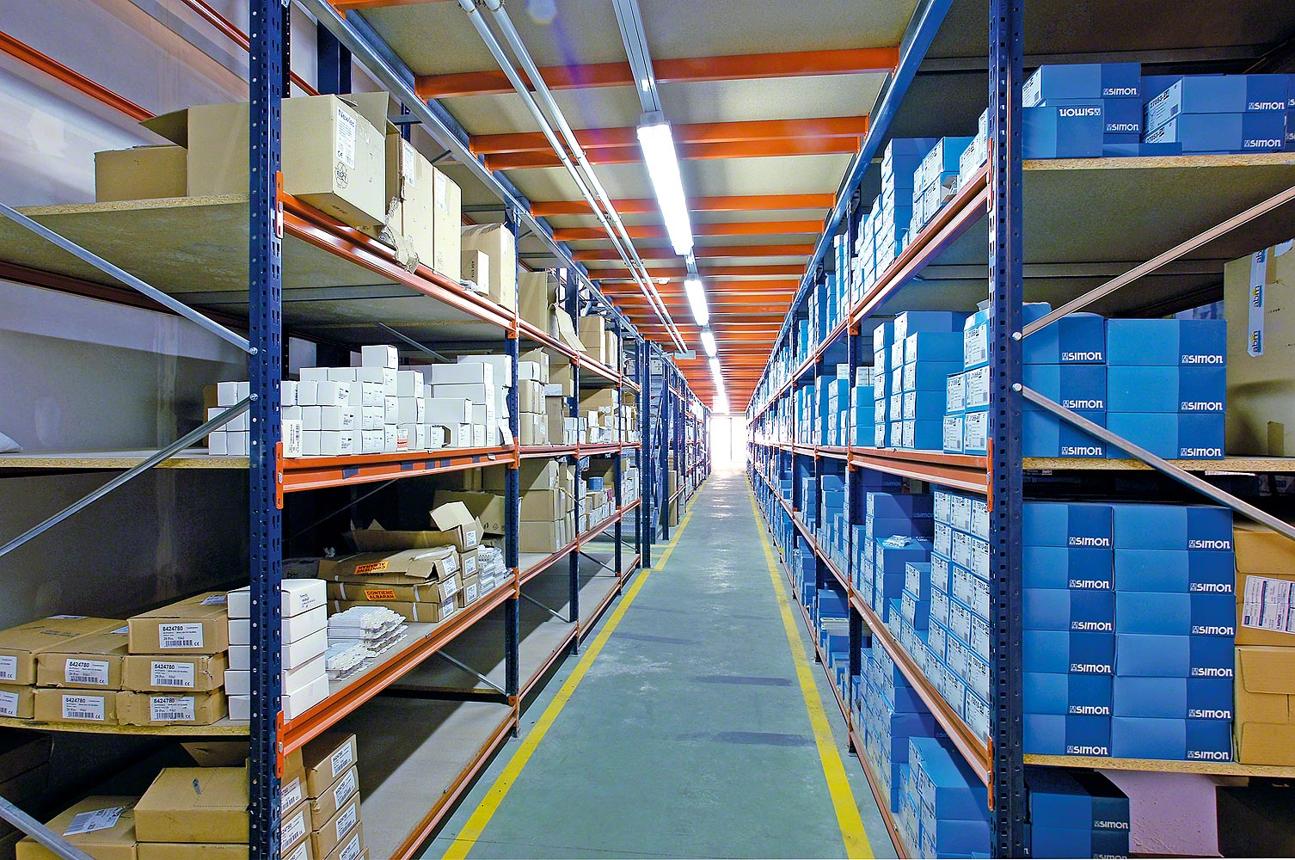
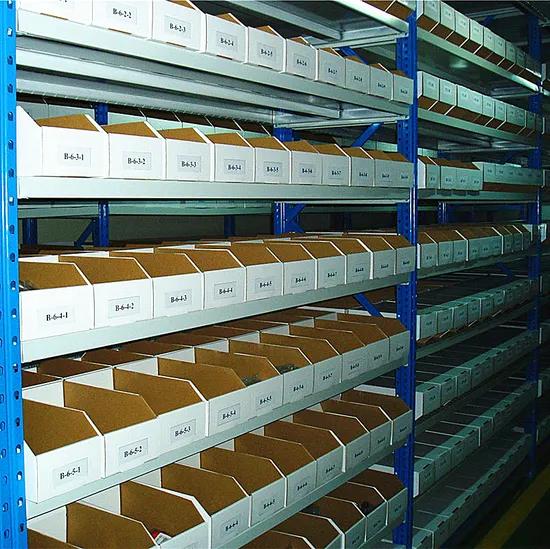
Small cartons and individual components: Light-duty warehouse shelving with multiple adjustable levels is usually practical. Shelf dividers or storage bins can help keep small items organized.
Large cartons and heavier components: Medium-duty warehouse shelving or longspan shelving provides wider and stronger storage levels for hand-loaded goods.
Palletized inventory: If products are stored and retrieved as complete pallets using a forklift or stacker, pallet racking is generally more suitable than ordinary warehouse shelving.
One common purchasing mistake is selecting a rack based only on the total weight of all stored products. What matters is how that weight is distributed across each shelf or beam level, as well as how the goods are loaded and removed.
2. Choose the Right Shelf Depth and Width
Shelf dimensions have a direct effect on storage capacity and accessibility. A deeper shelf may appear to offer more space, but it is not always the better choice for a small warehouse.
If the products are small cartons or components, excessively deep shelves can leave unused space at the back. Staff may need to move front-row products to find stock stored behind them. This slows down picking and makes inventory checks less convenient.
A useful starting point is to measure the actual cartons, containers, or products that will be placed on the shelves.
For example:
Small parts and compact cartons may fit on shelves around 300–450 mm deep.
General cartons and storage bins may need approximately 450–600 mm of shelf depth.
Larger boxes or bulky components may require 600–800 mm or deeper shelves, depending on their dimensions and handling method.
These are planning ranges, not universal specifications. The final shelf depth should allow products to sit securely without excessive overhang or inaccessible space.
Shelf width also matters. Wider shelves can reduce the number of upright frames required, but they need to be designed for the actual load and shelf construction. If products are relatively small, several narrower storage sections may provide better organization than one oversized shelf.
For a small warehouse, the objective is not simply to maximize the dimensions of each unit. It is to make every storage level usable.
3. Match Load Capacity to the Actual Products
Choosing warehouse shelving with insufficient load capacity creates a safety and operational problem. Buying shelving with far more capacity than necessary can also increase the project cost without improving storage efficiency.
When comparing light-duty and medium-duty warehouse shelving, check the rated load per shelf rather than relying on descriptions such as "heavy-duty" or "industrial grade."
Take a practical example.
A warehouse stores cartons weighing 20 kg each. If one shelf holds 10 cartons, the total stored weight is 200 kg. The shelf must be rated for that load under the manufacturer's stated loading conditions, with the load distributed as intended.
If the cartons are concentrated in the middle or placed unevenly, the actual loading condition may differ from the rated test condition. Shelf construction, beam support, decking, and frame design all affect performance.
When requesting a quotation, provide:
Maximum weight stored on one shelf
Typical product weight and carton dimensions
Number of storage levels
Whether loads are evenly distributed or concentrated
Whether products are loaded manually or mechanically
Also check whether the supplier specifies a per-shelf load rating, a bay load rating, or both. These figures are not interchangeable.
For small warehouses storing cartons, tools, and spare parts, medium-duty warehouse shelving is often a useful option when light-duty units are not strong enough. For palletized loads, specify the pallet weight and handling equipment so the supplier can select an appropriate pallet racking system.

4. Plan the Aisles Before Adding More Shelving
A small warehouse can look underutilized when viewed as an empty floor plan. It is tempting to install as many shelving rows as possible. However, storage density is only useful when employees can still reach products and move goods safely.
The required aisle width depends on the handling method.
For manual picking: Employees may use hand carts, picking trolleys, or carry cartons directly. The aisle should allow staff to reach shelves, turn, and move products without repeatedly blocking other workers.
For pallet trucks: The layout needs additional clearance for the equipment, pallet dimensions, and turning movements.
For forklifts or stackers: Do not use a standard shelving aisle as a substitute for an equipment operating aisle. The required working aisle must be checked against the specific machine's operating specifications.
A practical mistake is to purchase shelving first and decide the aisle width afterward. Once the units are installed, changing the layout can mean dismantling and relocating several rows.
Before ordering, mark the following on a floor plan:
Building walls, columns, doors, and emergency exits
Receiving and dispatch areas
Shelving rows and their overall dimensions
Main aisles and access aisles
Space for picking, packing, and temporary stock
For a small warehouse, a simple drawing with accurate measurements is often more useful than a complicated layout based on assumptions.
5. Use Vertical Space, but Check the Working Height
When floor space is limited, adding storage levels can increase capacity without expanding the warehouse footprint. However, the highest shelf should be determined by how goods will actually be accessed.
If employees load and retrieve products by hand, frequently used items should remain within a comfortable working range. Higher levels can be reserved for lighter or slower-moving inventory, provided the access method is safe and suitable.
If a ladder or lifting equipment is needed, that equipment must be considered in the layout rather than treated as an afterthought.
Before choosing shelving height, measure:
Floor-to-ceiling height
Obstructions such as lights, pipes, beams, and sprinkler systems
Maximum product height, including packaging
Required clearance for loading and retrieval
Any building or fire-safety restrictions
Do not assume that the full ceiling height can be used for storage. The usable height may be lower once building services and safety clearances are considered.
For a warehouse with a reasonable ceiling height, adjustable shelving with additional levels can be a cost-effective way to improve storage capacity. The shelf spacing should still match the products rather than being divided into equal gaps without considering carton height.
6. Decide Whether Adjustable Shelving Is Worth It
Inventory rarely stays exactly the same. A small warehouse may start with cartons of one size and gradually add larger packaging, new product lines, or seasonal stock.
Fixed shelf spacing can become inconvenient when product dimensions change. Adjustable warehouse shelving allows the storage levels to be repositioned, making it easier to accommodate different carton heights and storage bins.
This is particularly useful for:
Spare parts warehouses with many SKUs
E-commerce storage areas with changing product ranges
Workshops holding tools and replacement components
Small distributors handling products from different suppliers
However, adjustability should not be the only selection criterion. Check how the shelf levels are supported and secured, how much load each level can carry, and whether the adjustment system is suitable for repeated changes.
If the products have consistent dimensions and the storage arrangement is unlikely to change, a simpler fixed configuration may be sufficient.
7. Consider a Combination of Shelving and Pallet Racking
Not every product in a small warehouse needs the same storage method.
A business may receive goods on pallets but pick individual cartons for customer orders. In that situation, using only pallet racking or only warehouse shelving may not be the most practical arrangement.
A mixed storage layout can work better:
Pallet racking for reserve stock and full-pallet inventory
Medium-duty warehouse shelving for cartons and manually picked products
Small-parts bins for fast-moving components
A designated packing and dispatch area near the shipping door
This arrangement separates bulk storage from daily order picking. Employees do not need to access a full pallet every time they need a few cartons, and smaller products remain easier to locate.
The right balance depends on the number of SKUs, order frequency, pallet quantities, and available floor space. Even a small warehouse can benefit from dividing inventory into clear storage zones.
8. What Should You Confirm Before Buying Warehouse Shelving?
Once the storage method and layout are clear, compare supplier quotations using the same specifications. Otherwise, two shelving quotations may look similar while describing different dimensions, materials, or load ratings.
Before placing an order, confirm these details:
| Item | What to Confirm |
|---|---|
| Overall dimensions | Width, depth, and height of each shelving unit |
| Shelf configuration | Number of levels and spacing between shelves |
| Load capacity | Rated load per shelf and any bay load limit |
| Material | Steel grade or material specification |
| Shelf construction | Shelf panel, beam, bracket, or support structure |
| Surface finish | Powder coating or another specified finish |
| Adjustment method | How shelf heights are changed and secured |
| Installation | Assembly method and required accessories |
For a custom warehouse shelving project, a floor plan and product information will help the manufacturer recommend a more suitable configuration. Photos of the storage area can also help identify columns, doors, and other restrictions that may not be obvious from a basic dimension list.
It is worth confirming whether the quotation includes the required connectors, braces, shelf supports, and other accessories. Comparing only the price of the main shelving units may not show the complete project cost.
9. Common Mistakes When Setting Up a Small Warehouse
A few purchasing and layout mistakes appear repeatedly in small storage projects.
Buying the deepest shelves available: More depth does not automatically mean better storage. If products cannot be reached easily, part of the shelf becomes wasted space.
Ignoring the picking process: A layout that stores many cartons but makes daily order picking slow is not an efficient warehouse.
Choosing load capacity from product weight alone: Shelf capacity must account for the total load on each level and the way that load is distributed.
Leaving no room for receiving and packing: Goods need somewhere to go before storage and after picking. Filling every available area with shelving can disrupt the entire operation.
Using one shelving type for every product: Small parts, bulky cartons, and palletized goods have different storage requirements. A combination of systems may be more practical.
Planning only for current inventory: If the product range is likely to grow, leave room for additional units or choose a shelving configuration that can accommodate changes.
Frequently Asked Questions
What is the best warehouse shelving for a small warehouse?
For small warehouses storing cartons, spare parts, tools, and manually picked products, light-duty or medium-duty metal shelving is often a practical choice. The correct option depends on product weight, shelf dimensions, picking frequency, and available space. Pallet racking is more appropriate when goods are stored and retrieved on pallets.
How deep should warehouse shelves be?
Common shelf depths range from approximately 300 mm to 800 mm, depending on the products being stored. Measure the actual carton or product depth before selecting a shelf. Avoid choosing deeper shelves simply to increase nominal storage space.
Is medium-duty shelving suitable for a small warehouse?
Yes. Medium-duty warehouse shelving is suitable for many small warehouses that store heavier cartons, components, and bulky products by hand. Check the rated load per shelf and confirm that the unit's overall structure is suitable for the intended configuration.
How can I increase storage capacity in a small warehouse?
Start by reducing unused space between products, selecting suitable shelf depths, and using available vertical space. Adjustable shelving can help accommodate different product heights. A mixed layout with pallet racking, warehouse shelving, and small-parts storage may also improve the use of available floor space.
Should I choose boltless warehouse shelving?
Boltless shelving can be convenient for small warehouses because it is generally straightforward to assemble and allows shelf levels to be adjusted, depending on the design. Before buying, check the connection structure, shelf load rating, stability requirements, and whether the unit is suitable for the intended goods.
Can warehouse shelving be expanded later?
Many modular shelving systems can be extended by adding compatible bays or units. However, compatibility depends on the upright, beam, connector, and shelf design. If future expansion is likely, confirm the manufacturer's available extension options before purchasing the first batch.
Choose Shelving Around the Way Your Warehouse Works
The best warehouse shelving for a small warehouse is not necessarily the system with the greatest load capacity or the most storage levels. It is the one that fits the products, supports the actual picking process, and leaves enough room for goods to move through the warehouse.
For a shelving project, start with three things: the building dimensions, the size and weight of the products, and the way employees retrieve them. With this information, a warehouse shelving manufacturer can recommend suitable unit dimensions, shelf levels, load ratings, and a layout that makes better use of the available space.