


When comparing heavy duty and medium duty warehouse racking, many buyers start by looking at load capacity. However, choosing a warehouse storage system based on weight alone can lead to unnecessary costs or an unsuitable rack structure.
For example, a warehouse storing 300 kg cartons does not automatically need pallet racking. If workers pick individual cartons manually, medium duty or heavy duty shelving may be more practical. On the other hand, even relatively lightweight goods may require pallet racking if they are stored and moved as complete pallets using forklifts.
The real decision comes down to three things: how the goods are stored, how they are handled, and how much load each rack level must support.
1. Heavy Duty vs Medium Duty: Which One Fits Your Warehouse?
The first thing to identify is the storage unit.
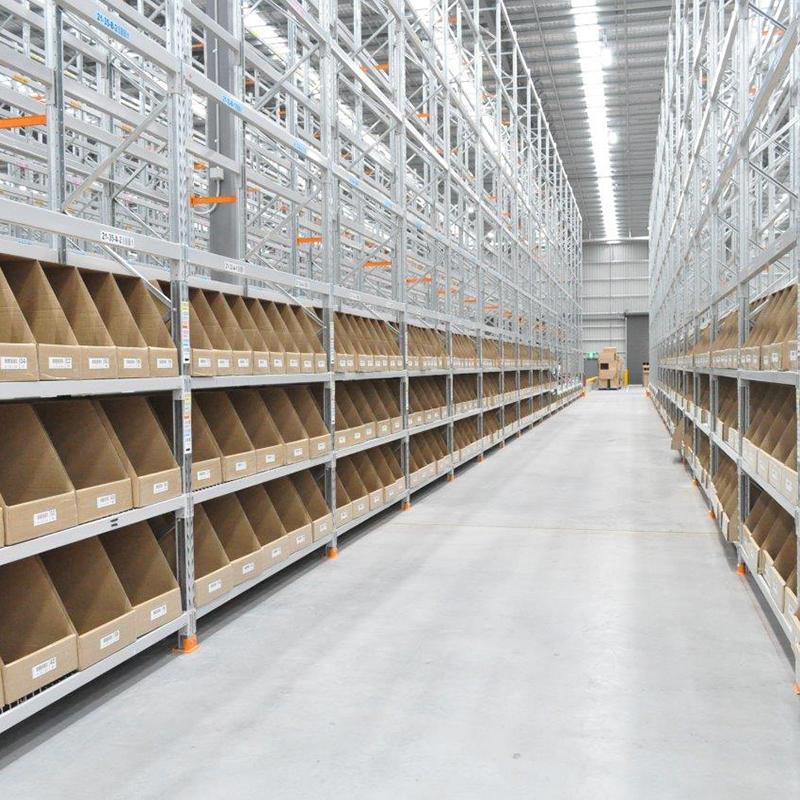
Medium duty warehouse racking is generally used for cartons, components, spare parts and other goods that workers access individually. Products are placed directly on steel shelves, and inventory can be picked without moving an entire pallet.
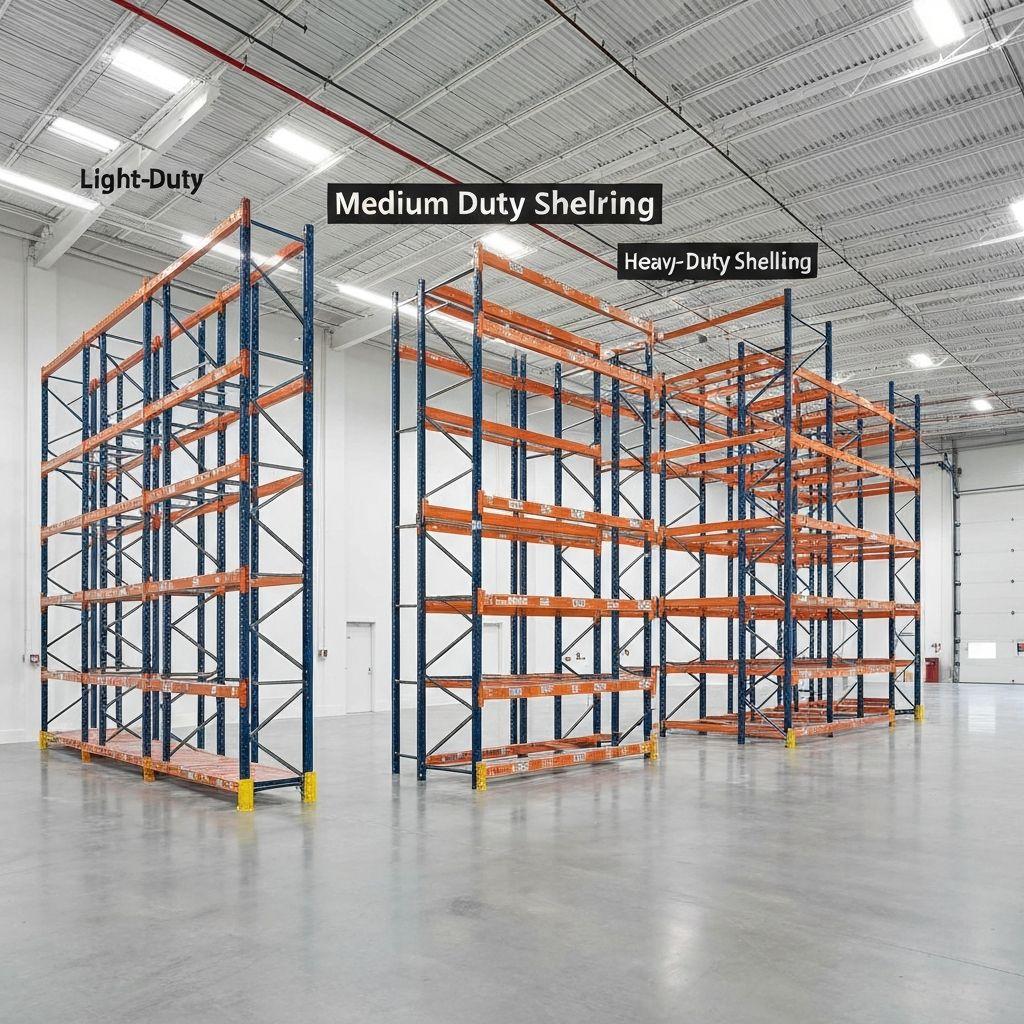
Heavy duty warehouse racking is designed for heavier or bulkier inventory. Depending on its structure, it can support manually handled heavy goods or palletized storage. Heavy duty pallet racking uses horizontal beams to support pallet loads and is normally operated with forklifts or other material-handling equipment.
Here is a practical way to distinguish them:
| Your Warehouse Requirement | More Suitable System |
|---|---|
| Small cartons and individual products | Medium Duty Racking |
| Spare parts and workshop components | Medium Duty Racking |
| Heavier equipment parts requiring manual access | Heavy Duty Shelving |
| Heavy palletized goods | Heavy Duty Pallet Racking |
| High-volume inventory moved by forklift | Heavy Duty Pallet Racking |
| Frequently picked small items | Medium Duty Shelving |
The important point is that heavy duty and medium duty describe the rack's intended load and structural configuration. They do not replace a proper assessment of the actual storage operation.
2. Don't Choose a Rack Before Calculating Your Actual Load
One common purchasing mistake is asking a supplier for a rack with a particular capacity per layer without explaining what will be stored on it.
Consider two different warehouse situations.
Example A: Spare Parts Warehouse
A manufacturer stores metal components in cartons. Each carton weighs 25 kg, and workers place 12 cartons on each shelf.
The total shelf load is 300 kg.
The warehouse needs direct access to individual cartons, so a medium duty shelving system may be a suitable starting point. The buyer should check the shelf's rated capacity, dimensions and loading conditions before confirming the specification.
Example B: Distribution Warehouse
A distributor stores finished products on pallets. Each loaded pallet weighs 800 kg, and forklifts move the pallets between storage positions.
If two pallets are placed on one beam level, that level must be designed for a combined load of 1,600 kg, assuming the two pallets are evenly distributed.
In this case, heavy duty pallet racking is the more appropriate system.
These examples show why the number of kilograms alone cannot determine the rack type. The storage method and load arrangement matter just as much.
3. Understand the Difference Between Shelf Capacity, Beam Capacity and Frame Capacity
This is particularly important when purchasing industrial warehouse racking.
Different rack structures use different load ratings. Buyers should not treat every capacity figure as interchangeable.
Shelf Capacity
For medium duty warehouse shelving, shelf capacity usually refers to the maximum load supported by one shelf level under specified loading conditions.
If a supplier quotes 300 kg per shelf, confirm whether this rating assumes a uniformly distributed load. Concentrating the same weight in one small area can create a different loading condition.
Beam Capacity
For heavy duty pallet racking, beam capacity normally refers to the combined load supported by a pair of horizontal beams at a specified span.
For example, if two pallets are stored on one level, the beam pair must support their combined loaded weight.
Upright Frame Capacity
The upright frame supports the accumulated loads transferred from the beam levels. Its capacity depends on the upright section, frame height, bracing arrangement and vertical spacing between beams.
Bay Capacity
Bay capacity refers to the total allowable load within one rack bay across its storage levels, subject to the manufacturer's specified configuration.
A rack with beams rated for a certain load does not automatically mean the upright frame can support the sum of all beam ratings.
Before placing an order, ask the manufacturer to provide the relevant rated capacities for the complete rack configuration. Load ratings must match the actual beam spans, level positions and installation arrangement. <Cite refs={["turn707338search1","turn707338search22","turn707338search8"]}/>
4. When Does Heavy Duty Racking Become an Unnecessary Expense?
A higher load rating is not always a better investment.
If your warehouse mainly stores small cartons, tools, spare parts or packaged products, installing heavy duty pallet racking may create additional costs without improving daily operations.
You may need:
Stronger upright frames and beams
Forklift-compatible aisle arrangements
Additional material-handling equipment
More space for pallet movement
A different loading and unloading process
If employees pick products individually throughout the day, a medium duty warehouse shelving system may provide more convenient access.
However, don't reduce the rack specification simply to lower the purchase price. The selected system still needs to meet the actual load requirements, including the weight and dimensions of the goods, shelf span and intended loading method.
A good purchasing decision is to pay for the capacity and structure your warehouse actually needs, rather than choosing the highest available specification.
5. How Warehouse Layout Changes Your Choice
The same inventory can require different storage systems depending on the warehouse workflow.
Take an automotive parts distributor as an example.
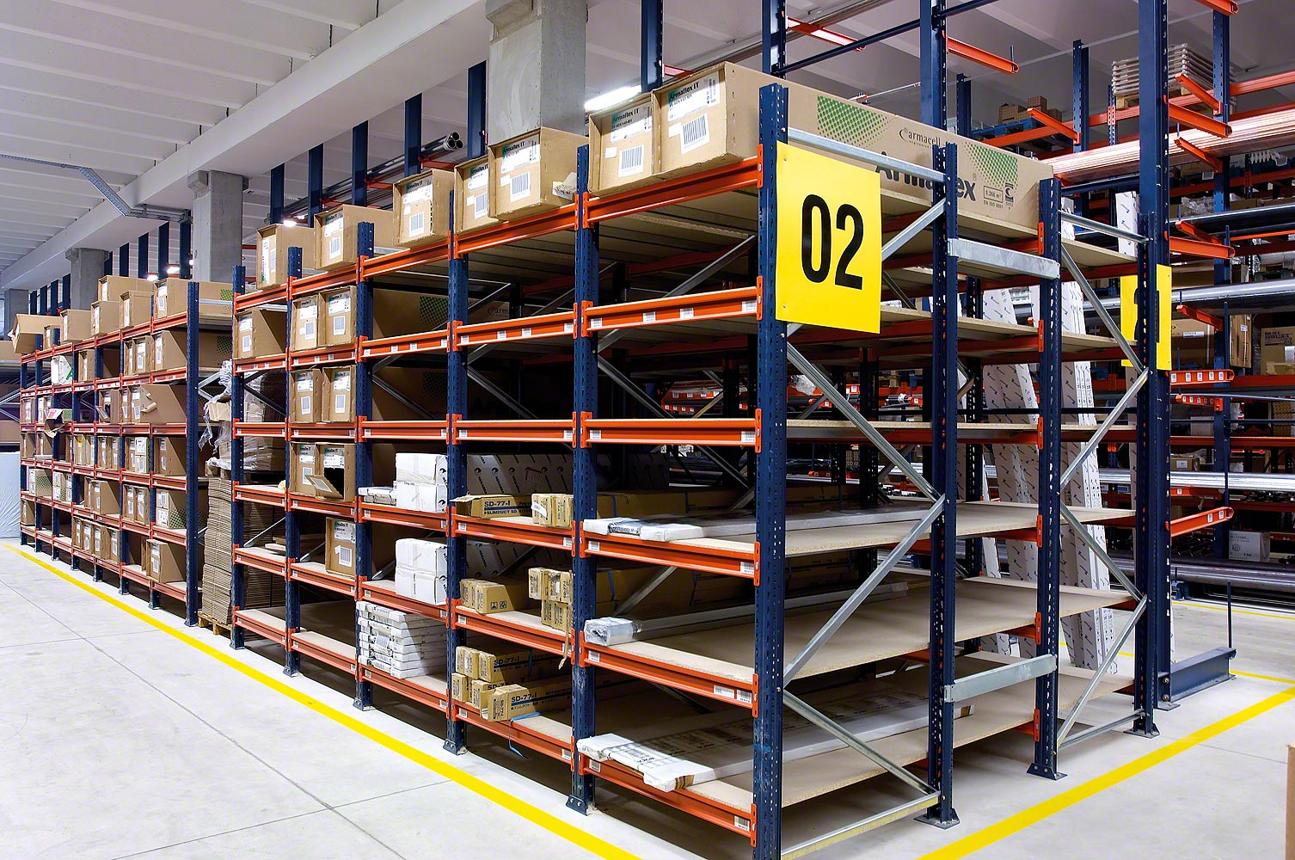
Small replacement parts, filters and accessories may be stored on medium duty warehouse shelves because employees need to pick individual items. Larger engines, transmissions or bulk components may require heavy duty storage structures.
If the entire warehouse uses one type of rack, workers may spend unnecessary time handling products or moving inventory.
A more practical arrangement may be:
Medium duty shelving in the small-parts picking area.
Heavy duty shelving for larger components.
Heavy duty pallet racking for reserve inventory stored on pallets.
This mixed arrangement separates daily picking stock from bulk storage.
When planning the layout, consider the actual movement of goods, not just the number of rack bays that can fit on the floor. Forklift turning space, aisle width, picking routes and replenishment access all affect warehouse efficiency.
6. What Information Should You Send a Warehouse Racking Manufacturer?
Before requesting a quotation, prepare the information below. It helps the manufacturer recommend a suitable structure instead of quoting a standard rack that may not fit your application.
| Information Required | Why It Matters |
|---|---|
| Maximum weight of goods | Determines the required load rating |
| Product or pallet dimensions | Determines shelf depth, width and beam span |
| Storage method | Identifies whether shelving or pallet racking is appropriate |
| Number of storage levels | Affects frame configuration and total loading |
| Required rack height | Determines upright dimensions and warehouse clearance |
| Picking method | Determines access and aisle requirements |
| Warehouse floor condition | Helps establish anchoring and installation requirements |
| Number of rack units | Helps calculate the complete project quantity |
For pallet racking projects, also provide the pallet dimensions, maximum loaded pallet weight and forklift model.
For medium duty shelving projects, provide the largest product dimensions, maximum shelf load and whether goods will be picked manually or with handling equipment.
If you already have a warehouse layout drawing, sending it with your inquiry can make the initial quotation process much more accurate.
7. Can Heavy Duty and Medium Duty Warehouse Racking Be Combined?
Yes. For many warehouses, combining different storage systems is more practical than using heavy duty or medium duty racking throughout the entire facility.
For example, a manufacturing warehouse may use heavy duty pallet racking for finished products and raw materials, while medium duty shelving is installed near production or assembly areas for tools, spare parts and smaller components.
This arrangement allows bulk inventory to remain in designated storage areas while frequently used items stay accessible to workers.
The key is to plan the two systems together. Their positions should support the actual replenishment process and avoid unnecessary movement between storage and picking areas.
Conclusion: Choose According to Your Storage Operation
The difference between heavy duty and medium duty warehouse racking is not simply the thickness of the steel or the maximum load rating.
Medium duty warehouse shelving is generally suitable for manually picked cartons, components and smaller inventory. Heavy duty shelving or pallet racking is more appropriate when goods are heavier, bulkier or stored in larger units.
Before choosing a system, identify the heaviest storage load, the dimensions of the goods, the handling equipment and the daily picking process.
TEBANG manufactures warehouse racking and metal storage shelving for different commercial and industrial applications. If you are planning a new warehouse or replacing an existing storage system, provide your product dimensions, loading requirements and warehouse layout so that the rack configuration can be selected according to the actual operation.
Frequently Asked Questions
1. Is heavy duty warehouse racking always better than medium duty racking?
No. Heavy duty racking is designed for higher-load applications, but it may be unnecessary for warehouses storing smaller products that are picked manually. The best option is the system that matches the actual load and handling requirements.
2. Can medium duty warehouse shelving support 300 kg per shelf?
Some medium duty shelving configurations can support this load, but capacity varies by shelf dimensions, material thickness, support structure and loading conditions. Always request the manufacturer's rated capacity for the exact configuration.
3. What is the difference between heavy duty shelving and heavy duty pallet racking?
Heavy duty shelving generally provides direct access to individual products and may be loaded manually or with suitable equipment. Heavy duty pallet racking uses beams to support pallets and is normally operated with forklifts. They serve different storage methods even though both are designed for heavier loads.
4. How do I know whether my warehouse needs pallet racking?
If your goods are stored on pallets and moved using forklifts or other pallet-handling equipment, pallet racking is usually a suitable option. The final design depends on pallet dimensions, loaded weight, storage height and handling equipment.
5. Can I increase the load capacity of an existing warehouse rack?
Do not increase the rated load simply by replacing beams or adding components. The complete structure, including uprights, connections, beam spacing, anchors and floor conditions, must be reviewed by the manufacturer or a qualified rack designer before any capacity change.