


Choosing a pallet racking system is not simply a matter of deciding how many pallets need to be stored. The rack configuration affects forklift movement, inventory access, stock rotation, storage density, and the amount of usable warehouse space.
A system that works well for a warehouse storing a small number of high-volume products may be unsuitable for a facility handling hundreds of SKUs. Similarly, increasing storage density by placing pallets deeper into a rack can reduce direct access and change how inventory is retrieved.
Before selecting a pallet racking system, warehouse operators should evaluate their pallet specifications, inventory profile, handling equipment, and daily storage requirements. The following guide explains how to make that decision.
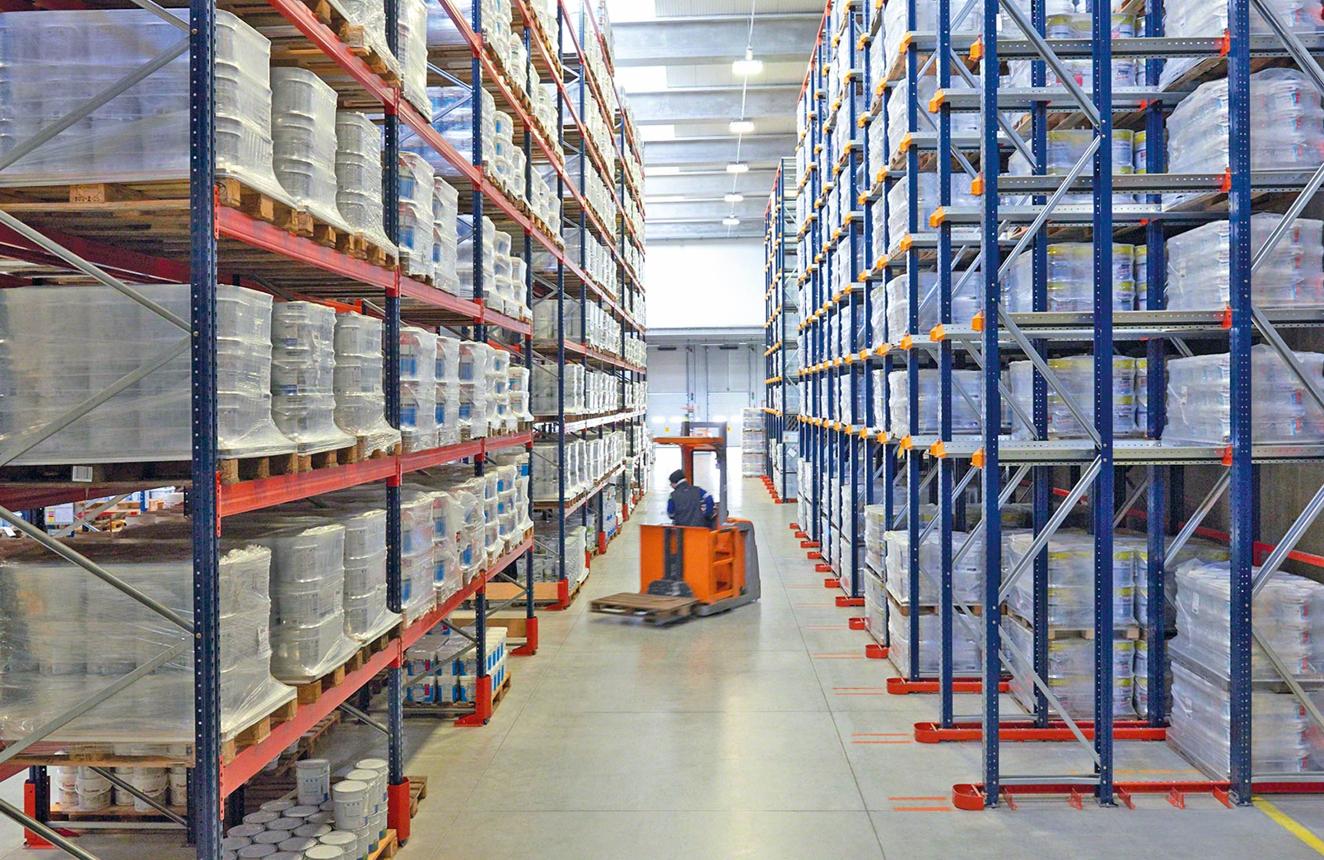
1. Start with Your Pallet Dimensions and Load Requirements
Pallet dimensions and loaded weight are the starting point for rack selection. They determine the required beam length, frame depth, storage level spacing, and structural capacity.
Do not base the rack design only on the nominal pallet size. The actual load may extend beyond the pallet edges, and different suppliers may deliver pallets with slightly different dimensions.
Prepare the following information:
- Pallet length and width
- Total height of the pallet and stored goods
- Maximum gross weight per loaded pallet
- Load overhang, if applicable
- Pallet material and condition
- Number of pallets stored on each beam level
The maximum pallet weight is particularly important. A rack holding several heavy pallets on one beam level needs a different structural configuration from one storing lightweight goods.
Ask the manufacturer to specify the rated load per beam level and the permitted bay configuration. Do not treat the load capacity of an individual beam level as the same as the total capacity of an entire rack bay.
If your warehouse handles several pallet sizes or load weights, provide the full range rather than one average specification. This helps prevent a design that works for standard pallets but cannot safely accommodate the largest loads.
2. Choose the Racking Type Based on Inventory Access
Different pallet racking systems offer different combinations of storage density and pallet accessibility. The right choice depends largely on how many product references you store and how often individual pallets need to be retrieved.
Selective Pallet Racking
Selective pallet racking provides direct access to each pallet from the operating aisle. It is a practical starting point for warehouses with many SKUs, mixed inventory, or frequent stock changes.
<text>Its main advantages include:</text>
Direct access to individual pallet positions
Flexible inventory management
Compatibility with common forklift and reach truck operations
Relatively straightforward installation and future reconfiguration
The trade-off is that each storage row needs forklift access. Compared with deeper storage systems, selective racking generally uses more floor area for aisles.
Choose it when product accessibility and inventory flexibility are more important than achieving the highest possible pallet density.
Double-Deep Pallet Racking
Double-deep racking stores two pallets deep instead of one. By reducing the number of forklift access aisles, it can increase storage density without changing the warehouse footprint.
However, the rear pallet cannot be accessed directly while the front pallet is in place. The system normally requires a suitable deep-reach truck and works best when multiple pallets of the same SKU are stored together.
It is worth considering when the warehouse has relatively stable inventory and wants more storage positions than conventional selective racking can provide.
Drive-In and Drive-Through Racking
Drive-in and drive-through systems allow forklifts to enter storage lanes to place or retrieve pallets. They are designed for warehouses that store larger quantities of fewer product references.
The main difference is the access arrangement:
Drive-in racking is accessed from one side and generally operates on a last-in, first-out (LIFO) basis.
Drive-through racking can be accessed from both ends and can support first-in, first-out (FIFO) operations.
These systems reduce the number of aisles, but they also reduce direct access to individual pallets. The pallet dimensions, forklift maneuvering requirements, and lane depth need careful consideration.
Push-Back Racking
Push-back racking uses carts on inclined rails. When a new pallet is loaded, it pushes the existing pallet positions deeper into the lane. When the front pallet is removed, the next pallet moves forward.
It provides multiple pallet positions in depth while allowing loading and retrieval from the same aisle. This makes it suitable for warehouses that store several pallets of the same product but do not require direct access to every pallet.
Push-back systems generally follow LIFO inventory handling. They also contain more mechanical components than standard selective racking, so pallet compatibility and maintenance requirements should be checked.
Pallet Flow Racking
Pallet flow racking uses gravity rollers or wheels to move pallets from the loading side toward the picking side.
It is particularly useful when FIFO stock rotation is important. For example, warehouses handling products with expiration dates or batch rotation requirements may benefit from a system that separates pallet loading and retrieval sides.
However, pallet flow racking requires suitable pallets, consistent loading conditions, and properly designed flow lanes. It is not automatically suitable for every product or pallet type.
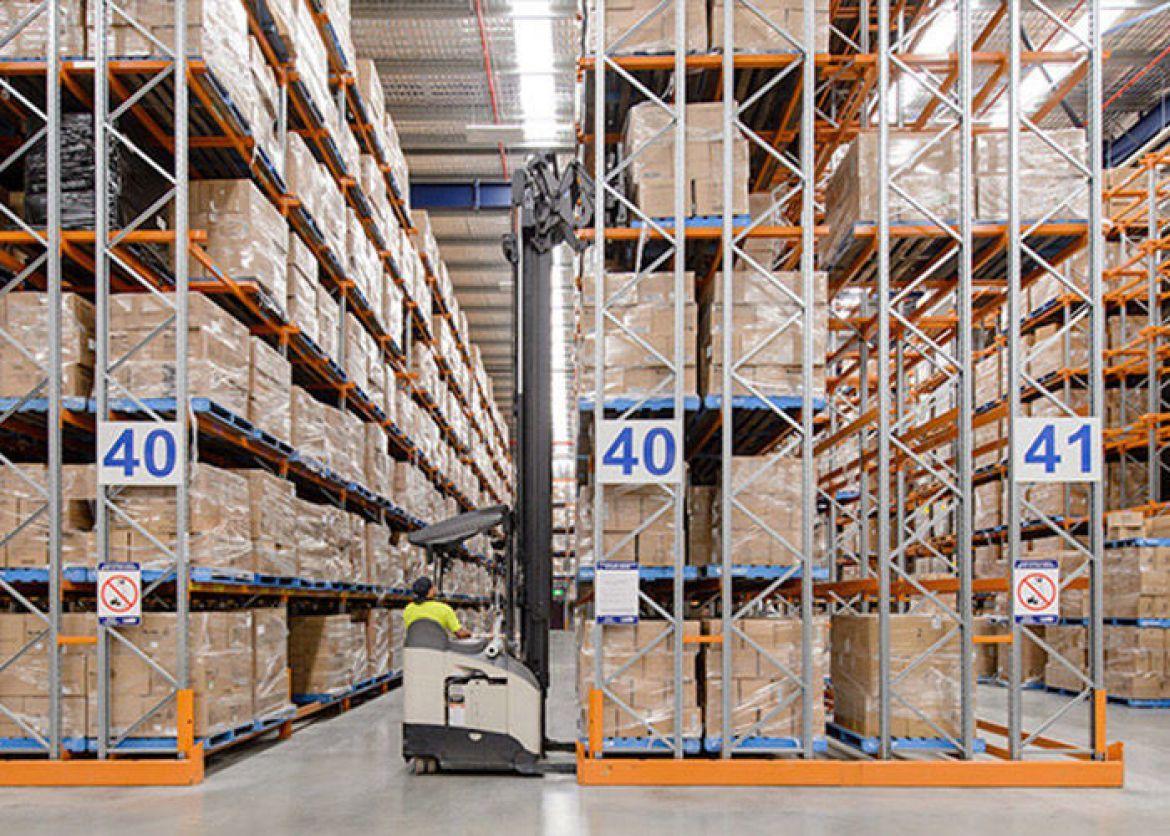
3. Compare Storage Density with Selectivity
Storage density and selectivity are two different performance measures.
Storage density refers to how many pallet positions can fit within the available warehouse space.
Selectivity refers to how easily a forklift operator can reach a specific pallet without moving other pallets first.
These requirements often compete with each other. Selective racking provides direct access to every pallet but needs more operating aisles. Deeper systems can store more pallets in a smaller floor area, but access becomes more restricted.
Use the following comparison as an initial selection guide:
| Racking system | Storage density | Pallet accessibility | Typical application |
|---|---|---|---|
| Selective | Lower | Direct access | Many SKUs, mixed inventory |
| Double-deep | Medium to high | Two pallets deep | Several pallets per SKU |
| Drive-in | High | Deep-lane access | Bulk storage, fewer SKUs |
| Drive-through | High | Access from both ends | Bulk storage with FIFO needs |
| Push-back | High | Multiple pallets deep | Medium SKU variety, LIFO |
| Pallet flow | High | Separate loading and picking sides | FIFO stock rotation |
Do not select a high-density system simply because the warehouse has limited floor space. If workers frequently need to retrieve individual pallets from different positions, reduced selectivity may increase handling time and complicate stock management.
A better comparison considers the number of usable pallet positions alongside the time and equipment required to access them.
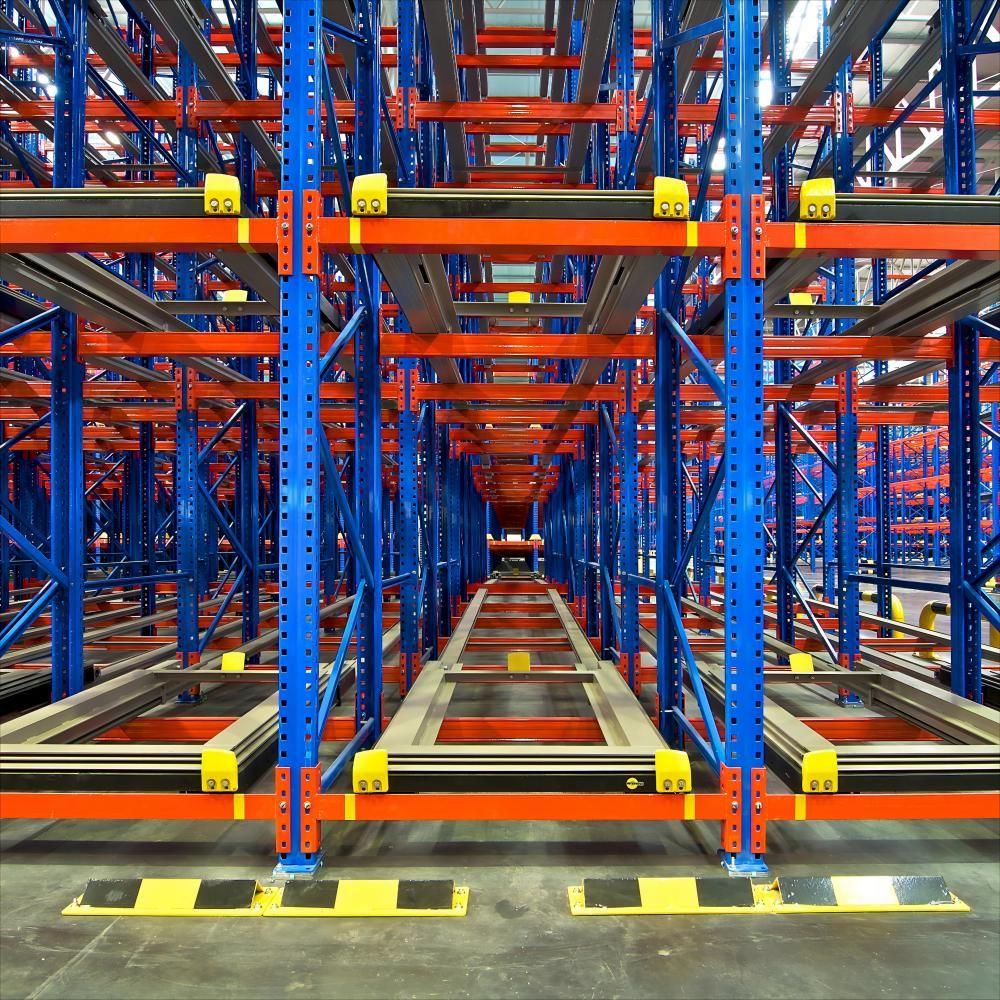
4. Match the Rack Layout to Your Forklift
The forklift already used in your warehouse can significantly influence the racking configuration.
A conventional counterbalance forklift usually requires wider aisles than a reach truck. Double-deep systems need equipment capable of reaching the rear pallet positions, while very-narrow-aisle (VNA) systems require specialized trucks and suitable guidance arrangements.
Before deciding on rack spacing, confirm:
Forklift type and model
Turning radius and operating aisle requirements
Maximum lifting height
Load capacity at the required lifting height
Fork length and pallet entry direction
Reach distance, where applicable
Whether additional specialized equipment is available
A common purchasing mistake is to design a high-density rack layout first and assume the existing forklift can operate in it. This can lead to additional equipment purchases or costly changes to the rack arrangement.
The rack supplier should evaluate the handling equipment and pallet dimensions together. The aisle width must suit the actual vehicle and operating conditions, not a general industry estimate.
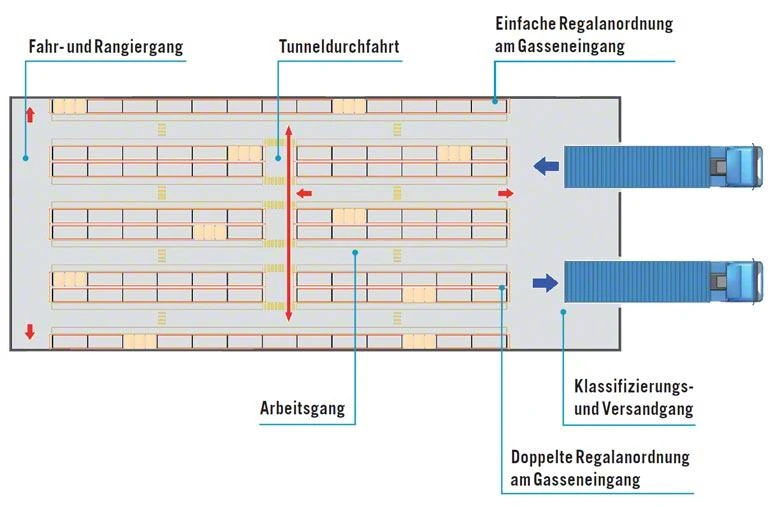
5. Use Warehouse Height Effectively
Warehouse clear height determines how many vertical storage levels may be possible, but it should not be treated as the only factor in rack height selection.
The usable rack height also depends on pallet load height, forklift lifting capability, roof structures, lighting, sprinkler arrangements, and required operating clearances.
When planning the rack height, check:
Clear height beneath the lowest overhead obstruction
Maximum loaded pallet height
Vertical clearance between storage levels
Forklift maximum lifting height
Roof beams, lighting, and sprinkler locations
Floor and structural requirements
Adding another storage level can increase pallet capacity without expanding the warehouse footprint. However, it is only useful if the forklift can safely place and retrieve pallets at that level.
If the warehouse uses different pallet heights, the beam levels may need to accommodate the largest loads while avoiding excessive unused vertical space elsewhere.
6. Consider Inventory Rotation: FIFO or LIFO
Inventory rotation should be decided before choosing a deep-storage racking system.
FIFO means the first pallet received is the first pallet dispatched. It is commonly required when products have expiration dates, production batches, or other stock rotation requirements.
LIFO means the most recently stored pallet is generally the first one retrieved. This may be acceptable for certain bulk storage operations where strict FIFO rotation is not necessary.
The main considerations are:
FIFO requirements: Consider selective, drive-through, or pallet flow systems, depending on the required access and density.
LIFO suitability: Drive-in and push-back systems may be appropriate when product batches can be stored and retrieved in lane sequence.
Mixed inventory: Selective racking often provides greater flexibility when different products have different retrieval schedules.
Do not assume that every warehouse can use LIFO simply because it offers higher storage density. Check the product's shelf life, batch control requirements, and inventory management procedures first.
7. Check Rack Structure, Accessories, and Safety Requirements
Once the storage type has been selected, the rack structure must be designed for the actual operating conditions.
The main components include upright frames, horizontal beams, bracing, beam connectors, and floor anchors. Their dimensions and specifications depend on the required load capacity, rack height, beam span, and installation conditions.
Depending on the application, additional components may include:
Pallet support bars
Wire mesh decking
Upright protectors
End-of-aisle guards
Row spacers
Back stops
Safety barriers
Load capacity signs
For example, pallet support bars may be necessary when the pallet design or storage arrangement requires additional support. Upright protectors can help reduce the consequences of forklift contact in exposed locations.
These accessories should be selected according to the rack design and warehouse operating risks. They should not be added or removed without checking compatibility with the system.
Also confirm the applicable local building, fire protection, seismic, and rack safety requirements before finalizing the design. The manufacturer should provide appropriate technical documentation and installation instructions for the specified configuration.
8. Decide Whether One Racking System Is Enough
A warehouse does not necessarily need to use the same racking system throughout the building.
In fact, combining different storage systems can be more practical when the inventory profile varies significantly.
For example:
Selective pallet racking can store products with many SKUs and irregular retrieval schedules.
Drive-in racking can accommodate bulk quantities of the same product.
Push-back racking can provide denser storage for products stored in multiple pallets per SKU.
Pallet flow racking can support FIFO inventory rotation.
Carton flow shelving can serve smaller-item picking operations.
This mixed arrangement allows each storage zone to perform a specific function instead of forcing every product into one rack configuration.
Before combining systems, check how replenishment, forklift routes, and picking operations connect the different areas. The layout should remain practical for daily warehouse work.
9. Plan for Future Inventory and Warehouse Changes
A pallet racking system is a long-term investment. The selected configuration should account for more than current pallet quantities.
Consider whether your warehouse may experience:
An increase in SKU numbers
Higher inventory volumes
New pallet dimensions
Changes in product weight
Seasonal stock fluctuations
Different forklift or handling equipment
Expansion into additional storage areas
Selective racking is generally easier to reconfigure when product references and storage requirements change. More specialized systems can provide higher density, but their layout and operating requirements may be less flexible.
For growing warehouses, it is useful to discuss future expansion with the manufacturer before ordering. Confirm whether additional bays, beams, or compatible accessories can be supplied later.
10. What Information Should You Prepare Before Requesting a Quote?
A manufacturer needs accurate project information to recommend the right pallet racking system and calculate the required components.
Prepare the following details:
| Information | What to provide |
|---|---|
| Warehouse dimensions | Length, width, clear height, columns, and obstructions |
| Pallet specifications | Length, width, height, and loaded weight |
| Inventory profile | Number of SKUs and pallets per SKU |
| Stock rotation | FIFO, LIFO, or batch-specific requirements |
| Storage target | Required pallet positions and storage levels |
| Handling equipment | Forklift type, lifting height, and aisle requirements |
| Operating conditions | Picking frequency and replenishment method |
| Safety requirements | Applicable local standards and site conditions |
| Future plans | Expected changes in inventory or storage capacity |
If you are unsure which system is suitable, provide the warehouse layout, pallet data, and inventory profile first. A manufacturer can then evaluate different configurations instead of quoting a standard rack system that may not fit the operation.
Frequently Asked Questions
Which pallet racking system is best for a general warehouse?
Selective pallet racking is a common starting point for general warehouses because it provides direct access to each pallet and accommodates a wide range of products. However, warehouses with large quantities of fewer SKUs may benefit from higher-density systems.
What is the difference between selective and drive-in pallet racking?
Selective pallet racking provides direct forklift access to each pallet position from an aisle. Drive-in racking stores pallets in deeper lanes, allowing forklifts to enter the rack structure. Drive-in systems provide higher storage density but generally have more restricted pallet access and use LIFO handling.
Is double-deep pallet racking suitable for every forklift?
No. Double-deep racking normally requires a reach truck or deep-reach forklift capable of accessing the rear pallet position. The equipment's reach, load capacity, and operating aisle requirements must be checked before selecting this configuration.
Which pallet racking system supports FIFO?
Selective racking, drive-through racking, and pallet flow racking can support FIFO operations, depending on the warehouse's loading and retrieval procedures. Pallet flow systems are specifically designed to move pallets from the loading side toward the picking side.
Can different pallet racking systems be used in one warehouse?
Yes. Combining selective, drive-in, push-back, or pallet flow systems can be useful when different products have different storage and retrieval requirements. The layout should be planned so that replenishment, picking, and forklift movement remain efficient.
Conclusion
Choosing the right pallet racking system requires a clear understanding of what the warehouse stores and how inventory moves. Pallet dimensions, load capacity, SKU variety, stock rotation, forklift type, aisle width, and available building height all influence the final decision.
Selective racking provides direct access and flexibility, while double-deep, drive-in, push-back, and pallet flow systems offer different ways to increase storage density or manage inventory rotation.
For most warehouse projects, the best solution is not necessarily the system with the highest pallet capacity. It is the configuration that provides the required storage space while keeping pallet access, handling equipment, and daily warehouse operations practical.