


A distribution center has different storage requirements from a conventional warehouse. Products may arrive in full pallets, move into temporary storage, get picked in smaller quantities, and leave the facility within a short period. Some inventory stays for several days, while other goods may pass through the building with very little storage time.
This makes storage rack selection more complicated. A system that provides high pallet density may not be suitable for a facility handling many different SKUs. Likewise, a rack layout designed for easy pallet access may not provide enough storage capacity when inbound volumes increase.
For distribution centers and logistics warehouses, the right storage rack system must support the movement of goods, not just hold inventory. The following considerations help warehouse operators choose a practical configuration.
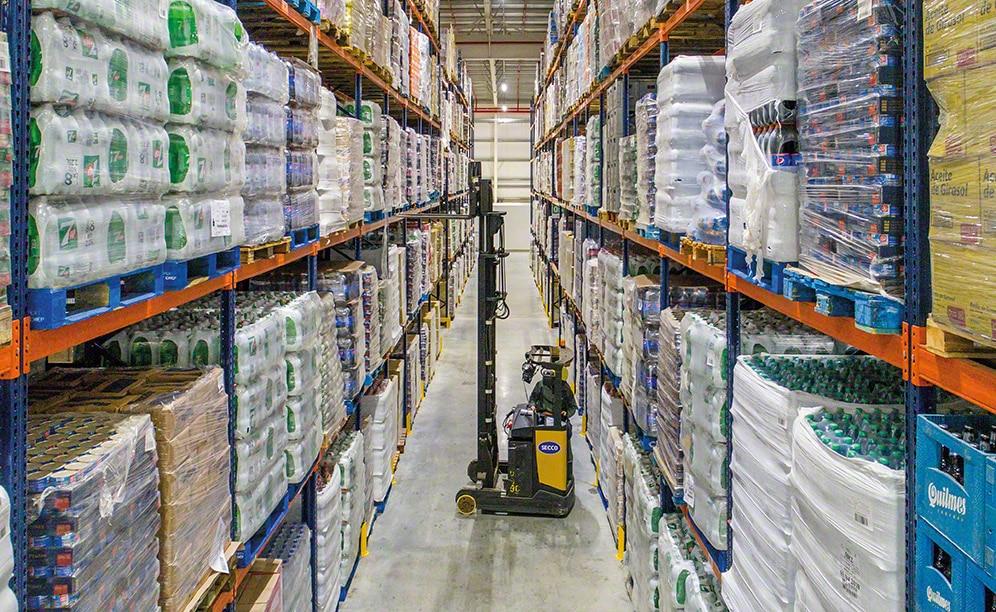
1. Start with the Flow of Goods, Not Just Warehouse Dimensions
Before selecting a rack type, understand how goods move through the facility.
A typical distribution center may include several operating zones:
Receiving: Incoming pallets are unloaded, checked, and temporarily staged.
Reserve storage: Full pallets or bulk inventory are stored until needed.
Order picking: Workers retrieve cartons, cases, or individual products to assemble orders.
Consolidation and packing: Picked goods are sorted, checked, and prepared for dispatch.
Shipping: Completed orders are staged and loaded onto outbound vehicles.
Each zone has a different storage purpose. Reserve storage may prioritize pallet capacity, while picking areas need convenient access to frequently ordered products. Receiving and shipping areas also need enough open floor space to handle fluctuating workloads.
A common planning mistake is to fill the available floor area with racks before considering how pallets and orders will move between these zones. This can create congestion around picking aisles, staging areas, and loading docks.
The rack layout should follow the operating process from inbound receiving to outbound dispatch.
2. Match the Racking System to SKU Variety and Pallet Turnover
The number of SKUs and the quantity stored for each SKU are important factors when selecting storage racks.
A distribution center handling hundreds or thousands of different products usually needs more direct access to individual pallet positions. A facility storing large quantities of a smaller product range may benefit from deeper storage lanes.
Consider these common options:
Selective pallet racking
Selective pallet racking provides direct access to each pallet position. It is suitable for warehouses with many SKUs, frequent stock rotation, and changing order requirements.
Its main advantage is selectivity. Forklift operators can retrieve a specific pallet without moving other pallets in the same rack lane. The trade-off is that conventional aisle arrangements use more floor space for forklift access.
Double-deep pallet racking
Double-deep racking stores two pallets deep in each position. It can increase storage density compared with single-deep selective racking, but requires suitable handling equipment and reduces direct access to some pallets.
It is more appropriate when several pallets of the same SKU are stored together and immediate access to every pallet is not essential.
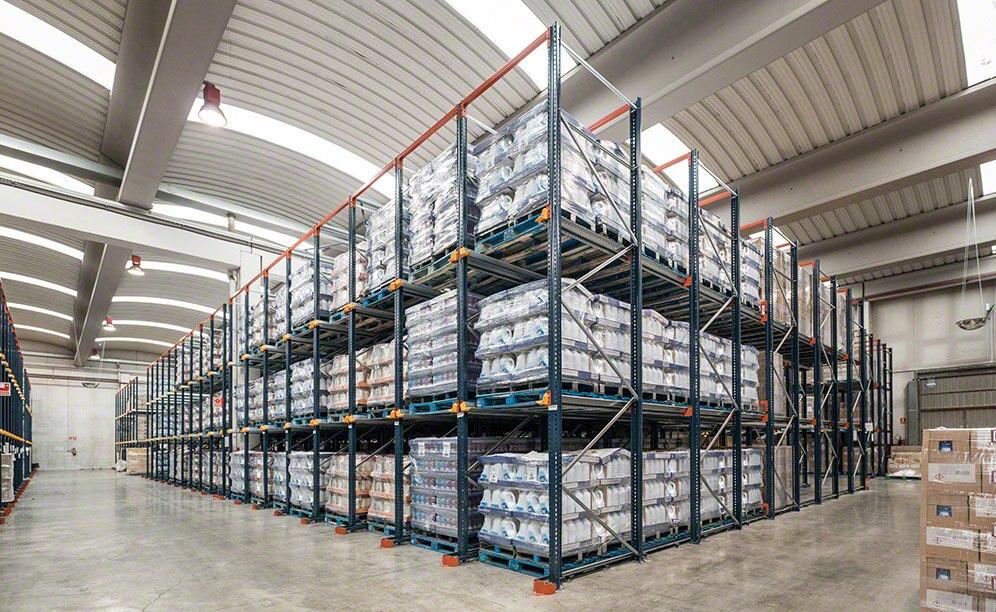
Drive-in racking
Drive-in racking allows forklifts to enter storage lanes to place and retrieve pallets. It is suitable for larger quantities of similar products where storage density is more important than direct access to every pallet.
However, it generally follows a last-in, first-out (LIFO) arrangement, so inventory rotation requirements must be checked before selection.
Push-back racking
Push-back racking uses carts on inclined rails. New pallets push previously stored pallets deeper into the lane, allowing multiple pallet positions to be stored behind the picking face.
It can be useful for distribution operations that need higher density but still handle multiple product groups in separate lanes.
Pallet flow racking
Pallet flow systems use gravity rollers or wheels to move pallets from the loading side toward the picking side. They can support first-in, first-out (FIFO) inventory rotation and are worth considering for products with strict rotation requirements.
The choice should reflect SKU distribution, pallet quantities, and picking frequency rather than storage density alone.
3. Separate Reserve Storage from Order Picking
One storage system does not necessarily need to serve every warehouse activity.
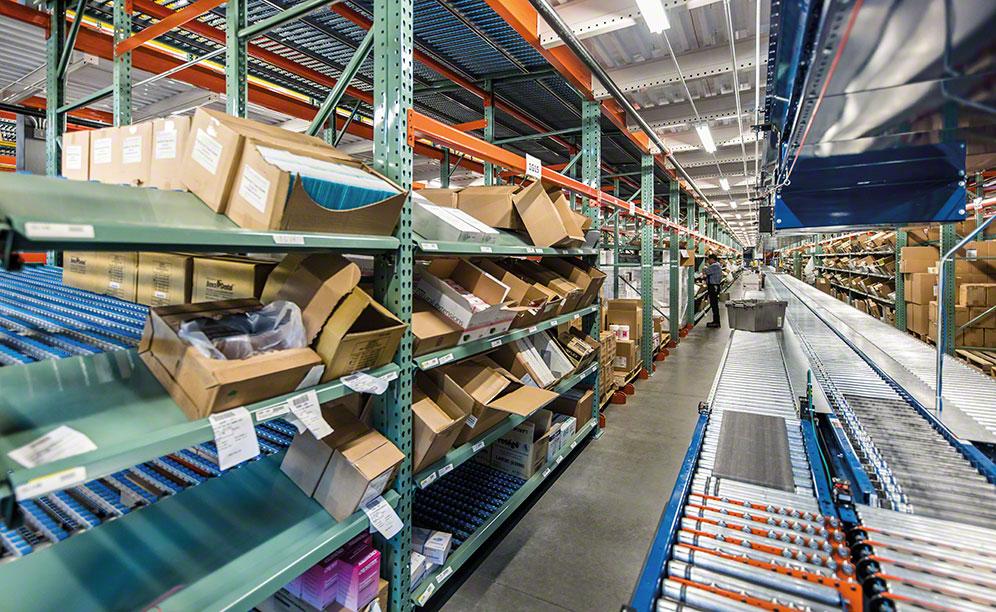
In many distribution centers, full pallets are stored in reserve locations while smaller quantities are picked from accessible locations closer to the working area.
For example, a facility may use selective pallet racking for reserve inventory and carton flow shelving for frequently picked cartons. Full pallets can be replenished from the reserve area when the picking locations run low.
This arrangement helps avoid using valuable forklift-accessible pallet positions for every small-item picking task.
The picking area should be designed around actual order profiles:
High-frequency SKUs should be placed in convenient picking locations.
Slow-moving products can be assigned less accessible positions where appropriate.
Small products may need bins, dividers, or dedicated shelving.
Frequently replenished picking locations should allow replenishment without obstructing order picking.
The purpose is to reduce unnecessary travel and product handling, not simply to increase the number of storage positions.
4. Choose Aisle Width Based on the Handling Equipment
Aisle width affects both rack capacity and warehouse traffic.
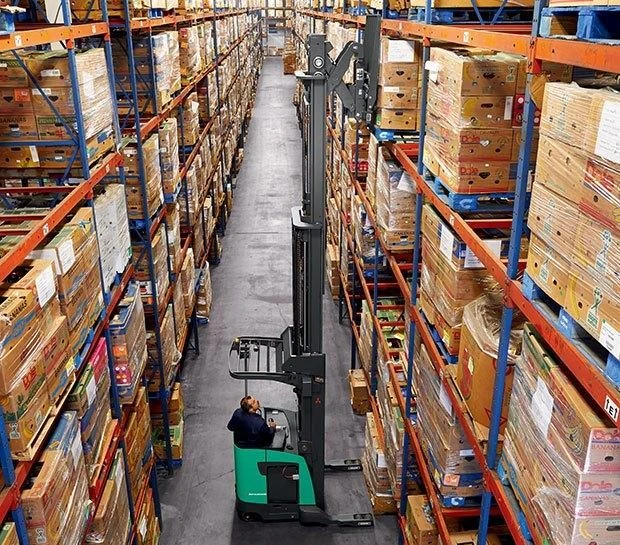
A warehouse using counterbalance forklifts generally needs wider operating aisles than one using reach trucks. Narrow-aisle or very-narrow-aisle operations may require specialized trucks and more controlled traffic arrangements.
Before finalizing the rack layout, confirm:
Forklift or reach truck type
Maximum lifting height
Turning radius and load dimensions
Required operating aisle width
Pallet entry and exit clearance
Whether vehicles need to pass one another
Pedestrian routes and crossing points
Reducing aisle width may create room for additional rack rows, but the change must be compatible with the equipment and operating process. A layout that increases pallet positions while slowing down every picking and replenishment movement may not improve overall warehouse performance.
It is better to evaluate storage capacity and material-handling productivity together. Distribution center layout guidance also emphasizes that aisle dimensions depend on the equipment, pallet size, and traffic requirements. Source
5. Use Vertical Space Without Restricting Operations
Distribution centers often have considerable vertical space that can be used for additional storage levels.
However, rack height should be determined by more than the building's ceiling height. The usable height depends on the forklift's lifting capability, pallet dimensions, sprinkler and lighting arrangements, roof structures, and required operating clearances.
A taller racking system may increase pallet capacity without expanding the building footprint. But it also requires suitable equipment and a rack structure designed for the specified loads and operating conditions.
When planning rack height, check:
Maximum building clear height
Pallet height, including the stored goods
Required clearance above each load
Forklift maximum lifting height
Sprinkler and fire protection arrangements
Structural and floor conditions
Do not assume that the highest possible rack configuration is automatically the most efficient. If upper-level pallet retrieval is slow or requires specialized equipment that the warehouse does not have, the additional storage positions may be difficult to use effectively.
6. Consider FIFO and LIFO Inventory Requirements
Inventory rotation affects which rack systems are suitable.
FIFO means the first pallet received should be the first pallet dispatched. It is important for products with expiration dates, production batches, or other stock rotation requirements.
LIFO means the last pallet placed into a storage lane is generally the first one retrieved. It can work for certain bulk storage applications where strict FIFO rotation is not required.
The following comparison provides a starting point:
| Storage system | Typical stock access | Rotation suitability |
|---|---|---|
| Selective pallet racking | Direct access to each pallet | Flexible FIFO management |
| Double-deep racking | Two pallets deep | Depends on pallet arrangement |
| Drive-in racking | Deep storage lanes | Generally LIFO |
| Drive-through racking | Access from both ends | Can support FIFO |
| Push-back racking | Multiple pallets per lane | Generally LIFO |
| Pallet flow racking | Loading and picking from opposite sides | FIFO |
Actual rotation depends on the rack design and how the warehouse loads and retrieves pallets. For products with strict date or batch control, confirm that the selected system supports the required operating procedure.
7. Plan for Pallet Dimensions and Load Capacity
Pallet specifications directly affect rack design.
A distribution center may receive pallets from different suppliers, and not all pallets have identical dimensions or conditions. Some loads may overhang the pallet, while others may be taller or heavier than the standard product range.
Before purchasing storage racks, identify:
Standard pallet length and width
Maximum pallet height, including goods
Maximum gross weight per pallet
Pallet condition and structural consistency
Load overhang, if any
Number of pallets stored per beam level
The rack beam length, frame depth, support arrangement, and load capacity must be designed around the actual pallet configuration.
It is also important to distinguish between load capacity per beam level and total bay capacity. These values should be clearly stated in the supplier's technical documentation.
For mixed pallet sizes, the rack design may need different beam configurations or additional support components. Avoid assuming that one standard rack dimension will safely accommodate every incoming pallet.
8. Include Rack Protection and Operational Safety
Distribution centers often have continuous forklift movement, frequent replenishment, and busy picking operations. Rack protection should therefore be considered during the initial layout stage.
Common protective components include:
Upright protectors
End-of-aisle guards
Column guards
Pallet support bars
Back stops
Safety barriers
Load capacity signs
The correct components depend on the rack configuration, vehicle movement, and site conditions.
For example, rack ends located near turning areas may be more exposed to forklift impact than uprights inside a protected aisle. Areas with frequent pallet loading may also need additional protection.
Rack inspections and maintenance should form part of the warehouse's operating procedures. Damaged components should be assessed promptly, and affected areas should not continue operating without appropriate checks. OSHA also highlights the importance of rack inspection, load limits, upright protection, and clear handling routes in warehouse operations. Source
9. Allow for Future Changes in Distribution Volume
Distribution operations can change as customer numbers, order profiles, and product ranges develop.
A storage system that works for today's pallet volume may become difficult to manage when the facility adds new SKUs or experiences seasonal demand peaks.
When selecting racks, consider whether the system can accommodate:
Additional rack bays
Different beam levels
New pallet dimensions
Increased reserve inventory
Changes in picking methods
Future conveyor or material-handling equipment
Modular selective racking can provide flexibility for facilities with changing inventory. More specialized high-density systems may provide greater storage capacity but require more careful planning before future layout changes.
For a growing distribution center, it is useful to leave room for additional storage rows or changes in picking zones rather than designing every available area as permanent rack space.
10. What Information Should You Provide to a Storage Rack Manufacturer?
A manufacturer needs more than the warehouse floor area to recommend a suitable storage system.
Prepare the following information before requesting a quotation:
| Project information | Details to provide |
|---|---|
| Warehouse dimensions | Length, width, clear height, columns, and obstructions |
| Inventory profile | Number of SKUs and quantity per SKU |
| Pallet specifications | Length, width, height, and maximum weight |
| Stock turnover | Fast-moving, slow-moving, and seasonal inventory |
| Picking requirements | Full-pallet, case-picking, or individual-item picking |
| Inventory rotation | FIFO, LIFO, or batch-specific requirements |
| Handling equipment | Forklift type, reach truck, pallet truck, or other equipment |
| Storage target | Required pallet positions and picking locations |
| Future development | Expected increase in volume or product range |
If the distribution center handles several types of goods, provide representative pallet and product specifications for each major category. This makes it easier to determine whether one rack system is sufficient or a combination of storage systems is more practical.
Frequently Asked Questions
What type of storage racks are best for a distribution center?
Selective pallet racking is a common choice for distribution centers with many SKUs and frequent pallet access requirements. Facilities handling large quantities of fewer SKUs may also consider drive-in, push-back, or pallet flow systems. The best choice depends on inventory turnover, pallet quantities, and picking requirements.
Is selective pallet racking suitable for high-volume logistics warehouses?
Yes. Selective pallet racking provides direct access to each pallet position, which is useful when a warehouse handles many product references or needs flexible stock management. Its main limitation is lower storage density compared with some deep-lane systems.
Which rack system is suitable for FIFO inventory?
Pallet flow racking and drive-through racking can support FIFO operations when designed and operated correctly. Selective pallet racking can also support FIFO inventory management because each pallet position is directly accessible.
Should distribution centers use different racks for storage and picking?
Often, yes. Reserve storage and order picking have different requirements. Pallet racking can hold bulk inventory, while carton flow racks or warehouse shelving can provide accessible picking locations for smaller quantities.
How does forklift type affect storage rack selection?
Forklift type affects aisle width, rack height, and the available storage layout. A reach truck can generally operate in narrower aisles than a conventional counterbalance forklift, while very-narrow-aisle systems require specialized equipment and operating arrangements.
Conclusion
Choosing storage racks for a distribution center or logistics warehouse requires a clear understanding of how goods move through the facility. SKU variety, pallet turnover, picking frequency, inventory rotation, forklift type, and future storage demand all influence the right rack configuration.
Selective pallet racking, drive-in systems, push-back racks, pallet flow racks, and carton flow shelving each serve different operational purposes. In many distribution centers, combining pallet storage with dedicated picking areas provides a more practical solution than relying on a single rack type.
Before finalizing a purchase, define the warehouse's operating process and provide accurate pallet, load, and equipment specifications. This gives the manufacturer a reliable basis for designing a storage system that supports both capacity and distribution efficiency.