


Warehouse inventory rarely stays the same for long. A warehouse may start with cartons of similar sizes, then gradually add larger packages, smaller components, seasonal products, or new product lines. When shelf heights and storage dimensions cannot adapt, usable space is wasted and workers may have to reorganize stock more often than necessary.
Adjustable warehouse shelving helps address this problem by allowing shelf levels to be repositioned as storage requirements change. However, not every adjustable shelving system offers the same flexibility. Shelf adjustment range, load capacity, frame design, shelf depth, and compatibility with storage bins all affect how useful the system will be over time.
The right choice depends on what you store today, how your inventory is likely to change, and how easily the shelving can be reconfigured without disrupting warehouse operations.
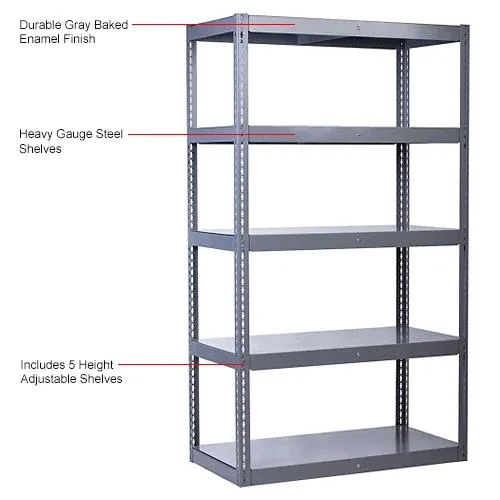
1. Understand What Changes in Your Inventory
Before choosing adjustable warehouse shelving, identify the type of inventory changes you actually experience.
Different changes require different shelving capabilities:
Product height changes: New cartons or products may be taller or shorter than existing stock. Adjustable shelf levels help maintain suitable vertical clearance.
Product dimensions change: A wider or deeper product range may require different shelf widths, depths, or storage arrangements.
SKU numbers increase: More product references may require additional shelf levels, dividers, or storage bins.
Stock volume fluctuates: Seasonal products or irregular purchasing cycles may require temporary changes in the space allocated to different items.
Product weight varies: New inventory may be heavier than the items originally stored, making load capacity an important consideration.
This distinction matters because adjusting shelf height cannot solve every storage problem. If products become significantly heavier, wider, or longer, the shelving structure itself may need to be changed.
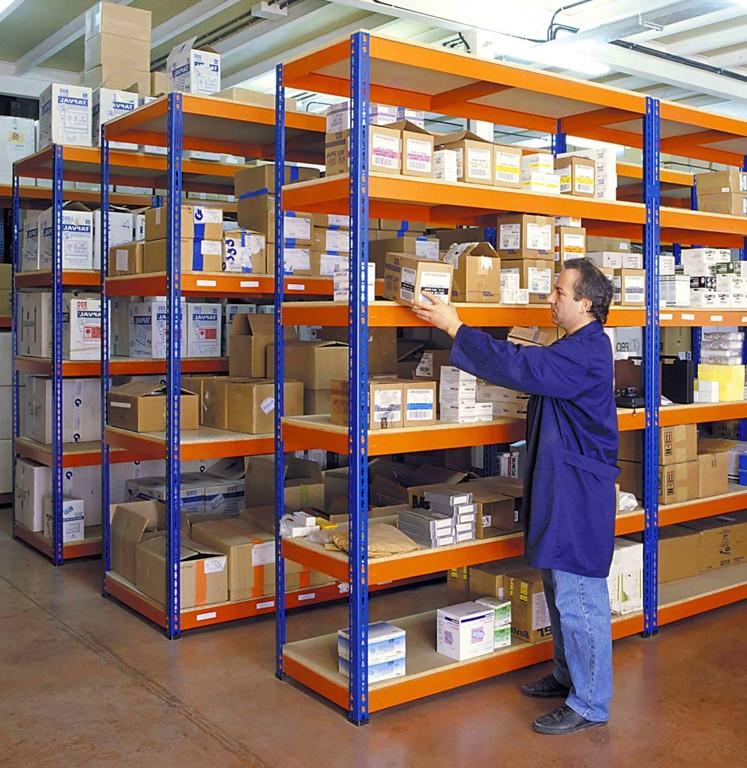
2. Choose a Shelf Adjustment Mechanism That Fits Your Operation
The adjustment mechanism determines how easily workers can change the storage configuration.
Common adjustable warehouse shelving designs include:
Clip-style shelving
Clip-style systems use shelf clips fitted into perforations or slots on the upright posts. Workers can remove the shelf, reposition the clips, and reinstall it at another height. This arrangement is suitable for warehouses that regularly change shelf spacing.
Boltless shelving
Boltless shelving uses connected beams and uprights, often with rivet or slot connections. Shelf levels can be repositioned by removing and reinstalling the beams and decking. It is commonly used for cartons, containers, and medium-duty warehouse storage.
Bolted shelving
Bolted systems use mechanical fasteners to connect structural components. They can provide a secure assembly, but changing shelf positions may require more tools and labor than clip-based or boltless designs.
The best mechanism depends on how frequently adjustments are needed. If product dimensions change every few weeks, a system that is quick to reconfigure can save considerable handling time. If the layout remains stable for long periods, a simpler system may be sufficient.
3. Check the Shelf Height Adjustment Range
The number of adjustment positions is not the only thing that matters. Buyers should check the actual adjustment increments and the usable vertical range.
For example, a shelving system with closely spaced adjustment positions allows more precise control over the clearance between shelves. A system with wider adjustment intervals may still work well when products have relatively consistent dimensions.
Consider a warehouse storing three types of cartons:
Small cartons requiring limited vertical clearance
Medium cartons needing more space for handling
Large cartons that occupy most of the available shelf height
If the shelf positions can be adjusted in suitable increments, the warehouse can allocate more vertical space to larger cartons and avoid leaving excessive unused gaps above smaller products.
Also check whether the lowest and highest shelf positions are practical. A system may have many adjustment holes, but its actual usable configuration is limited by the upright height, base structure, top clearance, and shelf construction.
4. Match Shelf Load Capacity to the Heaviest Inventory
Changing inventory does not always mean changing product dimensions. A warehouse may introduce heavier spare parts, metal components, tools, or packaged materials while keeping approximately the same storage footprint.
In this situation, load capacity becomes a critical selection factor.
Check the rated load capacity for each shelf level under the specified loading conditions. In particular, confirm whether the rating assumes a uniformly distributed load. A shelf carrying several evenly distributed cartons experiences a different loading condition from one supporting a single heavy item concentrated in the middle.
When evaluating capacity, consider:
Maximum weight of the heaviest stored product or container
Total load expected on each shelf
Shelf width and depth
Beam or shelf construction
Upright and connection design
Stability of the complete shelving unit
Do not assume that moving a shelf to a different height leaves every other structural condition unchanged. Follow the manufacturer's configuration and loading instructions after adjustment.
If future inventory may become substantially heavier, choose a shelving system with an appropriate capacity from the beginning rather than relying on later reinforcement.
5. Select Shelf Width and Depth for Your Product Range
Shelf dimensions affect both storage capacity and accessibility.
A shelf that is too narrow may not accommodate larger cartons or multiple storage bins. A shelf that is too deep can make smaller products difficult to reach, especially when workers need to retrieve items manually.
Before selecting the dimensions, measure the actual products or containers rather than estimating from packaging labels.
Pay attention to:
Shelf width: Determines how many cartons, bins, or individual products can be arranged side by side. Wider shelves may reduce the number of upright frames needed, but the load capacity of the shelf must be checked for the specified span.
Shelf depth: Determines how far products extend into the shelving unit. The depth should accommodate the stored items without creating unnecessary unused space or obstructing access.
Clear shelf opening: The usable space between uprights and above each shelf should allow products to be placed and removed without difficulty.
For warehouses with different product sizes, a combination of shelf widths and depths may be more practical than forcing every SKU into identical storage spaces.
6. Decide Whether You Need Solid Shelves, Wire Decking, or Storage Bins
Shelf material and accessories influence how adjustable warehouse shelving performs with different inventory types.
Solid steel shelves provide a continuous surface for small components, cartons, and packaged products. They are useful when stored items have small bases that could otherwise fall through gaps.
Wire mesh decking allows better visibility and airflow. It may be suitable for warehouses where visual inspection or sprinkler-related requirements influence the storage design. Its suitability should be checked against the actual product and facility requirements.
Plastic storage bins help organize small parts, fasteners, fittings, and other items with many SKUs. They can be arranged by product reference and moved when the shelf layout changes.
Shelf dividers separate different product groups and help prevent mixed inventory from spreading across a shelf.
If your inventory includes both small components and large cartons, consider combining shelving accessories rather than selecting one shelf arrangement for every product.
7. Consider How the Shelving Will Expand or Be Reconfigured
Adjustable shelf levels and expandable shelving are two different capabilities.
Adjustable shelving allows the vertical position of individual shelves to change. Expandable shelving allows additional bays or sections to be connected to an existing storage row.
For warehouses expecting more SKUs or higher stock volumes, both capabilities may be important.
A starter-and-add-on configuration can make it easier to extend a shelving row without purchasing completely independent units. However, buyers should confirm that the add-on sections are compatible with the original frame and connection system.
Before ordering, check:
Whether additional bays can share structural components
Whether extra shelves can be purchased separately
Whether shelf clips, beams, and connectors are replaceable
Whether different unit widths can be combined
Whether the shelving can be rearranged into another layout
It is worth considering future spare-part availability, particularly for distributors and warehouses that plan to use the same shelving system across multiple facilities.
8. Check Picking Access and Warehouse Workflow
A shelving system may offer plenty of adjustment options but still be unsuitable if it slows down daily picking.
For manually handled inventory, frequently picked products should be placed at convenient working heights. Heavy items should be stored at levels that allow safe handling, while less frequently accessed stock can occupy other suitable positions.
For warehouses using bins, dividers, and small cartons, the layout should allow workers to identify and retrieve individual SKUs without moving unrelated products.
Also consider aisle width and access from the front or sides. Increasing shelf depth or adding more units may improve storage density, but it can make picking more difficult if the aisle becomes too narrow.
The goal is not to fit the maximum number of shelves into the available area. It is to create a storage arrangement that can adapt without making inventory access less efficient.
9. Avoid These Common Selection Mistakes
Some shelving problems become apparent only after inventory has been loaded.
Choosing adjustment positions without measuring products
A large number of adjustment holes does not guarantee a suitable configuration. Measure the tallest and widest products, including packaging and handling clearance.
Ignoring future load changes
A system selected for lightweight cartons may not be suitable when heavier components are introduced. Confirm the maximum expected shelf load before ordering.
Using one shelf depth for every product
Different product groups may need different storage depths. Oversized shelves can waste space and make smaller items harder to access.
Confusing adjustable shelves with expandable systems
Being able to reposition shelf levels does not necessarily mean the shelving can be extended with additional bays. Confirm both capabilities if future expansion is expected.
Overlooking accessory compatibility
Storage bins, dividers, back panels, and other accessories should fit the shelving dimensions and connection design. Check compatibility before placing the order.

10. What Information Should You Provide When Ordering Adjustable Warehouse Shelving?
A clear specification helps the manufacturer recommend a suitable shelving structure instead of quoting a standard unit that may not match the actual inventory.
Prepare the following information:
| Specification | Information to provide |
|---|---|
| Product range | Types of goods, cartons, components, or containers |
| Product dimensions | Length, width, and height of typical and largest items |
| Load requirements | Maximum expected weight per shelf |
| Shelf dimensions | Required width and depth |
| Adjustment requirements | Preferred adjustment increments and usable height range |
| Storage accessories | Bins, dividers, steel panels, or wire decking |
| Unit configuration | Number of bays, shelf levels, and total row length |
| Warehouse conditions | Available floor area, ceiling height, and access requirements |
| Future plans | Expected SKU growth or inventory changes |
If you are not sure which configuration will work best, provide a product size range and several representative product weights. This gives the supplier a practical basis for recommending shelf spacing, dimensions, and load specifications.
Frequently Asked Questions
What is adjustable warehouse shelving used for?
Adjustable warehouse shelving is used to store products with different dimensions and changing storage requirements. It allows shelf levels to be repositioned, helping warehouses use vertical space more efficiently as inventory changes.
How often can warehouse shelving levels be adjusted?
The frequency depends on the shelving design and the manufacturer's instructions. Clip-style and boltless systems are generally suitable for reconfiguration when required, but shelves should be unloaded before adjustment and reinstalled according to the specified assembly procedure.
Is adjustable shelving suitable for heavy warehouse inventory?
Yes, provided the shelving system is designed and rated for the required loads. Buyers should confirm the capacity per shelf level and the loading conditions rather than assuming that all adjustable shelving is suitable for heavy goods.
What is the difference between adjustable shelving and pallet racking?
Adjustable shelving is generally used for manually handled cartons, components, bins, and smaller inventory. Pallet racking is designed for palletized goods and typically uses forklifts or other mechanical handling equipment. Both can have adjustable storage levels, but their structural design and operating methods are different.
Can adjustable warehouse shelving be expanded later?
Many modular shelving systems support additional bays or sections. However, expansion depends on the connection design and compatibility of the components. Confirm the availability of matching uprights, shelves, beams, and accessories before ordering.
Conclusion
Choosing adjustable warehouse shelving for changing inventory requires more than checking whether the shelf levels can move. The adjustment mechanism, available height increments, shelf load capacity, dimensions, decking options, and expansion compatibility all affect long-term usability.
For warehouses with frequently changing product sizes or SKU ranges, a well-matched adjustable system can reduce wasted vertical space and make storage reorganization easier. The best starting point is to measure the current product range, identify likely inventory changes, and select a shelving structure that can accommodate those changes without compromising load capacity or picking access.