


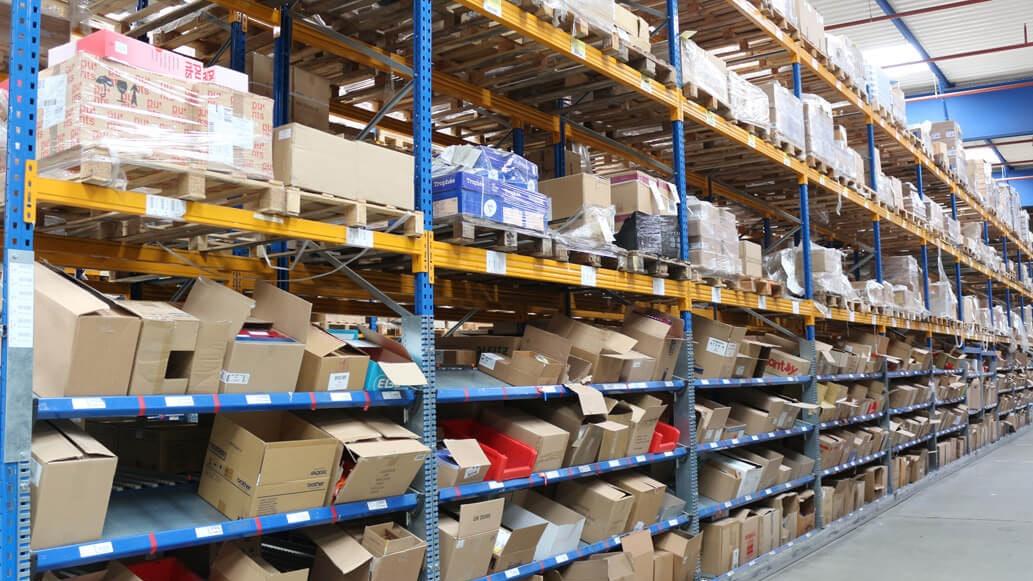
A warehouse rarely stores products in one standard size. Some items arrive in full pallets, others in cartons, plastic bins, small components, or long and irregular packages. Even products within the same SKU category may have different packaging dimensions.
When all these goods are placed on the same standard shelving, storage space is often wasted. Small cartons occupy deep shelves, oversized products extend beyond their assigned locations, and frequently handled items become difficult to reach.
Designing a storage rack system for mixed-size inventory requires more than choosing a rack with adjustable shelves. The goal is to assign suitable storage locations to different product dimensions while keeping loads accessible, properly supported, and within the rack's rated capacity.
1. Measure the Inventory Before Designing the Racks
Start with the actual goods rather than standard rack dimensions.
For each product or packaging group, record:
Length, width, and height of the stored unit.
Gross weight, including packaging or containers.
Quantity normally stored at one time.
Whether the item is stored individually, in cartons, in bins, or on pallets.
How frequently it is accessed.
Whether it can be stacked or requires individual support.
Measure the outer dimensions of the actual storage unit. For example, if products are stored in cartons, use the carton dimensions rather than the dimensions of the products inside. If a pallet carries goods that extend beyond its edges, record the full loaded dimensions.
It is also useful to separate normal inventory from peak stock. A rack designed around average stock levels may not provide enough usable locations during seasonal demand or large incoming shipments.
A simple inventory classification can help:
| Inventory group | Typical characteristics | Storage requirement |
|---|---|---|
| Small parts | Compact, lightweight, many individual items | Bins or compartment shelving |
| Small and medium cartons | Different carton footprints and heights | Adjustable steel shelving |
| Large cartons | Bulky packages with varying weights | Longspan or heavy-duty shelving |
| Palletized goods | Larger unit loads handled by forklift | Selective pallet racking |
| Long materials | Pipes, profiles, bars, or timber | Cantilever racking |
| Irregular products | Unusual shapes or unstable bases | Dedicated supports or custom rack sections |
This classification does not mean every group needs a separate room. It provides a starting point for deciding which products can share a rack configuration and which need a different storage method.
2. Group Products by Size and Handling Method
A common mistake is to create a separate rack location for every individual product size. This can make the warehouse difficult to manage and create too many partially used storage spaces.
Instead, group products with similar dimensions and handling requirements.
For example, cartons with similar heights and depths can share adjustable shelving levels. Small components can be organized in bins of consistent dimensions. Large or heavy cartons can be assigned to lower, wider shelf positions.
The grouping should consider more than physical size. Two products may have similar dimensions but require different handling methods. A fragile item may need individual separation, while a stable carton can be stored in a stack. A long metal profile may need multiple support points even if its total weight is relatively low.
A practical design often uses a limited number of standard storage modules, with adjustable shelf positions or removable dividers to accommodate variations within each group.
3. Select Rack Types for Different Size Ranges
A mixed-size inventory warehouse does not necessarily need one rack type throughout the facility. Combining systems can make better use of the available space.
Adjustable Steel Shelving for Cartons and Small Products
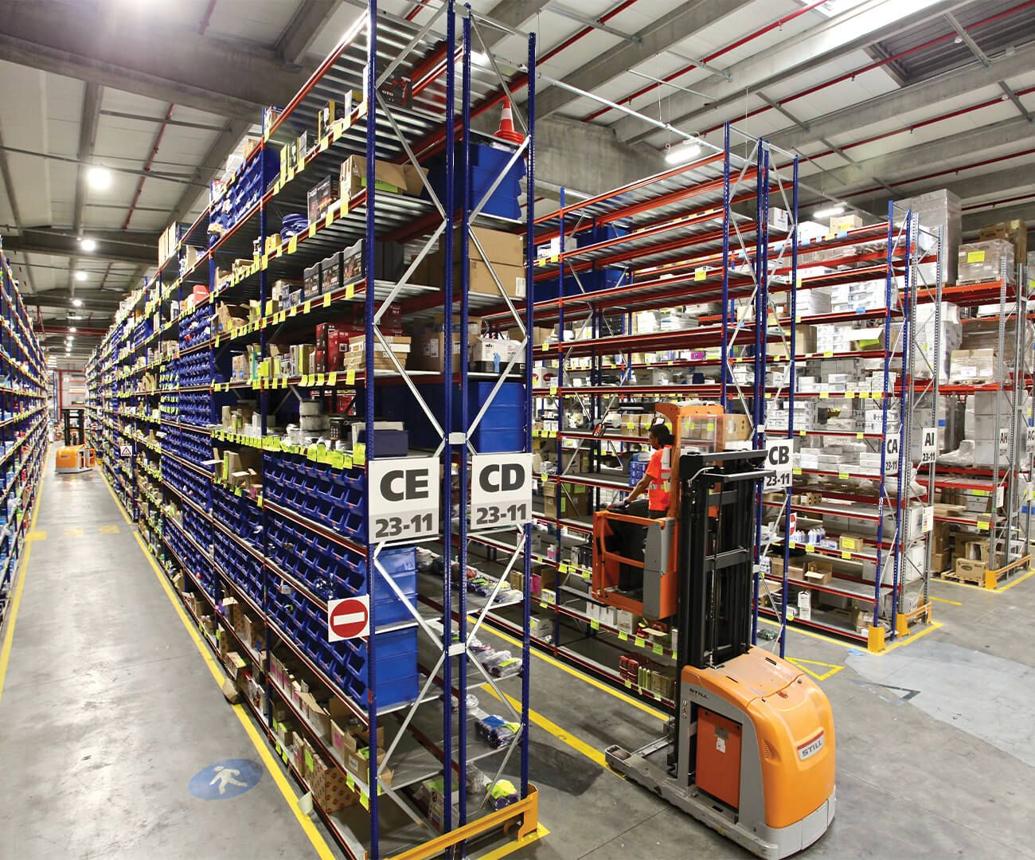
Adjustable steel shelving is suitable for cartons, containers, spare parts, and manually handled products. Shelf levels can be moved to suit different product heights, reducing unused vertical space.
It works particularly well when the inventory changes regularly but most products remain within a manageable size and weight range.
For small items, bins and dividers can create individual picking locations. For larger cartons, open shelves provide easier access without requiring separate pallet positions.
Longspan Shelving for Bulky Cartons
Longspan shelving provides wider shelf spans and is useful for products that are too large for conventional light-duty shelving but do not need forklift pallet storage.
It can accommodate larger cartons, plastic containers, and bulky packaged goods. When selecting it, check the shelf span, shelf depth, beam capacity, and the way the load is distributed across the shelf.
A longer shelf is not automatically suitable for heavier goods. Its rated capacity must match the actual loading arrangement.
Selective Pallet Racking for Large Unit Loads
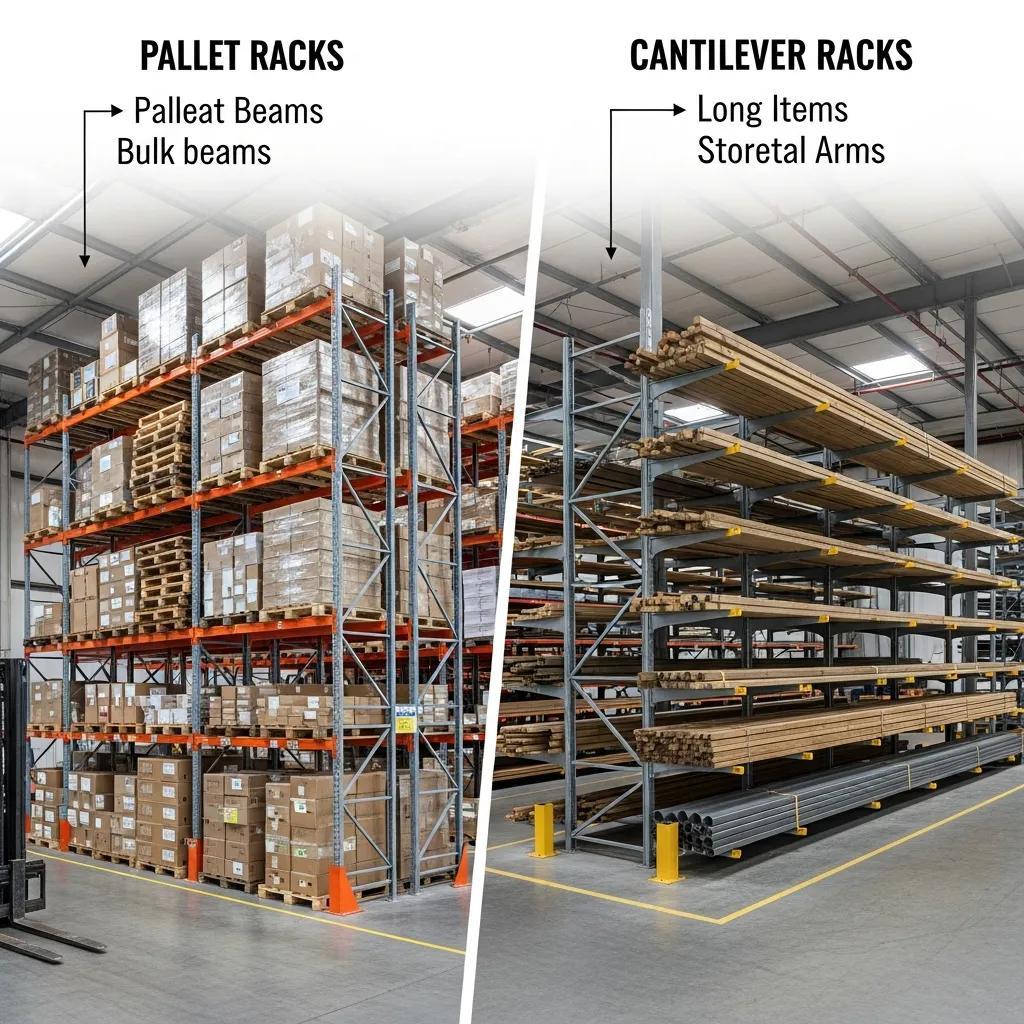
Pallet racking is more appropriate for goods stored and moved as palletized units. It provides direct access to individual pallet locations, which is useful when the warehouse handles many different products with limited pallet quantities per SKU.
Different pallet dimensions may require different beam arrangements or bay configurations. If pallet sizes vary significantly, do not assume that every pallet position can use the same clear opening.
Cantilever Racking for Long or Awkward Products
Long products such as pipes, metal profiles, timber, and similar materials are difficult to store efficiently on conventional shelves.
Cantilever racking uses horizontal arms to support these materials without front columns obstructing access. The arm length, spacing, load rating, and number of support points should be determined by the actual material dimensions and handling method.
Forcing long stock into standard pallet bays can reduce accessibility and create poor load support.
4. Design Shelf Height, Depth, and Width Around Real Products
Rack dimensions have a direct effect on how much usable storage space a warehouse gets.
Shelf height
The vertical distance between shelves should accommodate the product height, packaging, and the space needed to place or remove the item. If shelves are too close together, operators may struggle to retrieve cartons. If they are too far apart, the unused vertical space reduces storage capacity.
Adjustable shelf levels are useful because they allow the configuration to change as the product mix changes. However, shelf positions should be set according to actual storage requirements rather than adjusted randomly whenever a new item arrives.
Shelf depth
Shelf depth should provide sufficient support for the stored goods without creating excessive unused space behind smaller products.
For manually picked cartons, an excessively deep shelf can make rear items difficult to reach. For palletized or bulky goods, the required depth depends on the load dimensions, support arrangement, and rack design.
Shelf width
Shelf width should reflect the number and size of products stored in each location. Wider shelves can reduce the number of rack uprights required, but the load distribution and shelf capacity must be checked.
A practical approach is to define several standard shelf sizes for the main product groups, then use adjustable or modular components for the remaining variations.
5. Do Not Overlook Shelf Decking and Load Support
Different products need different types of shelf surfaces.
Solid steel shelves provide a continuous surface for cartons, small components, and products that might fall through open gaps. Wire mesh decking allows visibility and can be useful in some pallet-rack applications. Steel panels or other purpose-designed supports may be required for specific load shapes.
The choice should be based on how the product contacts the shelf.
For example, a carton with a narrow or uneven base may need more continuous support than a stable plastic container. Small loose components should be kept in suitable bins rather than placed directly on a shelf where they can move or fall.
Also check whether the shelf is loaded evenly. A shelf holding several small cartons may have a different loading pattern from one supporting a single heavy machine component.
Never select shelf capacity based only on the total weight of all products without considering how that weight is distributed.
6. Keep Frequently Picked Products Easy to Reach
Storage capacity is only one part of warehouse efficiency. If operators spend too much time searching for products or reaching into unsuitable locations, the rack design may create additional handling work.
Products with high picking frequency should generally be placed in convenient locations, while slower-moving items can use less accessible positions if their handling requirements allow it.
For manual picking areas, consider:
Keeping frequently accessed products within comfortable picking zones.
Placing heavier products at lower levels where practical.
Using clear location labels for different product sizes.
Separating similar-looking products to reduce picking mistakes.
Leaving sufficient working space in front of shelves.
For forklift-operated areas, rack layout must be coordinated with the actual handling equipment. Aisle width, turning space, lifting height, and load dimensions should all be checked before the final layout is approved.
7. Plan for Inventory Changes Without Compromising Capacity
Mixed-size inventory often changes over time. New products may arrive in larger cartons, packaging may be revised, or the warehouse may begin handling additional product categories.
Adjustable shelving and modular rack components can help accommodate these changes. But flexibility should not be confused with unlimited reconfiguration.
Moving a shelf or beam to a different position can affect the load capacity of the rack structure. Any change must follow the manufacturer's configuration and loading requirements.
For warehouses with frequent product changes, consider:
Adjustable beam or shelf levels.
Standardized bins and storage containers.
Removable shelf dividers.
Modular rack bays that can be expanded.
Separate areas for oversized or irregular products.
A small allowance for future inventory growth.
The most useful system is not necessarily the one with the greatest number of adjustable parts. It is the one that can accommodate likely changes without requiring major reconstruction or unapproved modifications.
8. Common Design Mistakes to Avoid
Several problems appear repeatedly in mixed-size storage areas.
Using one shelf depth for every product
Small cartons may occupy deep shelves while leaving unused space behind them. Larger products may still fail to fit. Multiple shelf depths or dedicated zones are often more practical.
Choosing rack capacity from average product weight
The maximum expected load should be considered. Heavy products concentrated on one shelf or one part of a shelf can create a different structural demand from evenly distributed goods.
Mixing manual picking and forklift storage without clear separation
These activities need different aisle and access arrangements. Combining them without planning can create congestion and unnecessary handling risks.
Ignoring oversized products
Long, wide, or irregular goods should be identified early. They may require cantilever racks, special supports, or dedicated floor storage rather than a standard shelf location.
Making unapproved rack adjustments
Adding shelves, changing beam positions, or replacing components without checking the manufacturer's specifications can compromise the original load configuration.
9. What Information Should You Provide to a Rack Manufacturer?
A useful storage rack proposal needs accurate information about both the inventory and the building.
| Information | Details to prepare |
|---|---|
| Product dimensions | Length, width, and height by product group |
| Product weight | Maximum gross weight per carton, bin, or unit |
| Storage method | Individual items, cartons, bins, bundles, or pallets |
| Quantity | Normal and peak inventory volume |
| Picking method | Manual handling, pallet truck, forklift, or other equipment |
| Warehouse dimensions | Length, width, clear height, columns, doors, and obstructions |
| Required storage capacity | Number of shelves, bins, bays, or pallet positions |
| Future changes | Expected new product sizes or inventory growth |
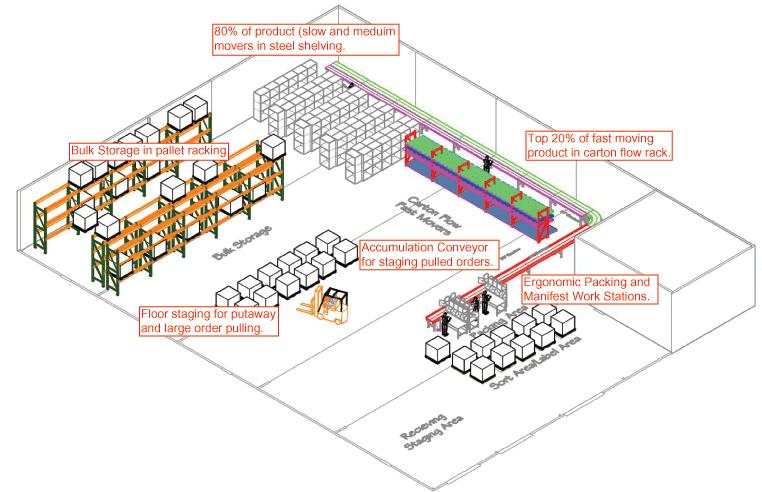
Photographs of representative products are helpful, especially for irregular or oversized items. A floor plan with the receiving, storage, picking, and dispatch areas marked can also help the manufacturer understand the intended workflow.
When comparing quotations, check that the proposed shelf dimensions, load ratings, rack configuration, and included accessories match the same inventory requirements. Comparing prices without comparing these details can lead to very different storage solutions being treated as equivalent.
Conclusion
Designing a storage rack system for mixed-size inventory starts with understanding the dimensions, weight, packaging, and handling method of the goods. From there, products can be grouped into practical storage zones and matched with adjustable shelving, longspan racks, pallet racking, cantilever systems, or a combination of these options.
The objective is not to make every shelf fit every product. It is to create a storage arrangement where each product has an appropriate location, loads are properly supported, and inventory can be accessed without wasting valuable warehouse space.
For a suitable rack proposal, prepare a product size and weight list, expected storage quantities, handling equipment details, and a warehouse floor plan. These details give the manufacturer a much clearer basis for designing a storage rack system around your actual inventory.