


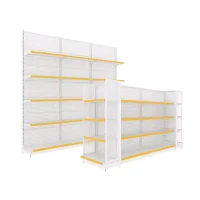

Inventory management is a critical aspect of running a successful supermarket. It involves ensuring that the right products are available in the right quantities at the right time. One often overlooked but essential element in this process is the supermarket shelf. As a supermarket shelf supplier, I have witnessed firsthand the significant role these shelves play in inventory management.
1. Organization and Visibility
Supermarket shelves are the primary means of organizing products within a store. They provide a structured layout that allows customers to easily find what they are looking for. By categorizing products and placing them on specific shelves, supermarkets can streamline the shopping experience. For example, placing all canned goods on one aisle and fresh produce on another makes it easier for customers to navigate the store.
Moreover, well - designed shelves enhance product visibility. Products that are displayed prominently are more likely to catch the customer's eye, leading to increased sales. This visibility also helps in inventory management. When products are clearly visible, store employees can quickly identify low - stock items. For instance, if a particular brand of cereal is running low, it will be obvious on the shelf, allowing for timely reordering.
The Supermarkt Regal we supply is designed to maximize visibility. With adjustable shelves and clear labeling, it ensures that products are presented in an attractive and accessible manner. This not only benefits the customers but also helps the supermarket staff in managing inventory more effectively.
2. Space Utilization
Efficient space utilization is crucial in inventory management. Supermarket shelves are designed to make the most of the available space. They come in various sizes and configurations, allowing supermarkets to customize their storage based on their product range and store layout.
For example, our Department Store Racks are highly versatile. They can be adjusted to accommodate different product sizes, from small cosmetics to large household appliances. This flexibility enables supermarkets to store a wide variety of products in a limited space.
By optimizing space, supermarkets can increase their inventory capacity without having to expand their physical footprint. This is particularly important in urban areas where space is at a premium. Additionally, proper space utilization reduces the risk of overstocking, as products can be stored more efficiently, and inventory turnover can be improved.
3. Inventory Tracking
Supermarket shelves play a vital role in inventory tracking. Each shelf can be assigned a specific location code, which is linked to the store's inventory management system. When products are placed on the shelves, they are scanned and recorded in the system. This allows for real - time tracking of inventory levels.
For example, if a product is sold, the inventory management system can automatically update the stock level on the corresponding shelf. This enables store managers to monitor inventory levels accurately and make informed decisions about reordering. In addition, shelf - level tracking can help identify slow - moving products. If a particular item has been sitting on the shelf for an extended period, it may indicate a problem with demand or placement.
Our Supermarket Display Shelf can be integrated with advanced inventory management systems. This integration provides seamless tracking of products, ensuring that the supermarket always has an accurate picture of its inventory.
4. Product Protection
Supermarket shelves also contribute to product protection. They are designed to hold products securely, preventing damage during storage and display. For example, shelves with sturdy construction and proper spacing can prevent products from falling or getting crushed.
This is especially important for fragile items such as glass bottles or delicate food products. By protecting products, supermarkets can reduce the amount of damaged inventory, which in turn saves money. Additionally, well - protected products are more likely to be sold, improving overall sales and inventory turnover.
5. Facilitating Stock Rotation
Stock rotation is an important aspect of inventory management, especially for perishable goods. Supermarket shelves are designed to facilitate stock rotation. For example, the First - In - First - Out (FIFO) method can be easily implemented on shelves. New products are placed at the back of the shelf, while older products are moved to the front. This ensures that products with earlier expiration dates are sold first, reducing the risk of spoilage.
Our shelves are designed with features that make stock rotation simple and efficient. For example, they can be equipped with sliding trays or adjustable dividers, allowing for easy movement of products. This helps supermarkets maintain a fresh inventory and minimize waste.
6. Impact on Customer Behavior
The design and layout of supermarket shelves can have a significant impact on customer behavior, which in turn affects inventory management. A well - organized and visually appealing shelf layout can encourage customers to make more purchases. For example, end - cap displays on shelves can attract customers' attention and promote impulse buying.
When customers make more purchases, inventory turnover increases. This means that products are sold more quickly, reducing the need for large inventories. Additionally, satisfied customers are more likely to return to the store, leading to increased sales in the long run.
7. Cost - Effectiveness
Supermarket shelves can contribute to cost - effectiveness in inventory management. By optimizing space, reducing product damage, and improving inventory turnover, supermarkets can save money on storage, waste, and reordering.
For example, using our high - quality shelves can reduce the need for frequent replacements, as they are built to last. This saves on the cost of purchasing new shelves over time. Additionally, efficient inventory management means that supermarkets can avoid overstocking, which ties up capital.
Conclusion
In conclusion, supermarket shelves play a multifaceted role in inventory management. They are essential for organizing products, enhancing visibility, utilizing space, tracking inventory, protecting products, facilitating stock rotation, influencing customer behavior, and ensuring cost - effectiveness.
As a supermarket shelf supplier, we understand the importance of providing high - quality shelves that meet the specific needs of supermarkets. Our Supermarkt Regal, Department Store Racks, and Supermarket Display Shelf are designed to optimize inventory management and improve the overall performance of supermarkets.


If you are a supermarket owner or manager looking to enhance your inventory management, we invite you to contact us for a consultation. We can help you choose the right shelves for your store and provide solutions that will improve your bottom line.