


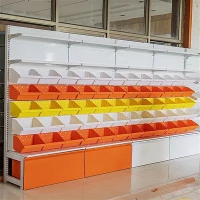


Hey there! I'm a supplier of Warehouse Flow Racks, and today I want to dig into a hot topic: Are Warehouse Flow Racks suitable for cross - docking operations?
Let's start by getting clear on what cross - docking is. Cross - docking is a logistics strategy where products are unloaded from an incoming truck and directly loaded onto an outgoing truck, with little to no storage in between. The goal is to speed up the movement of goods, reduce inventory holding costs, and improve overall supply chain efficiency.
Now, let's talk about Warehouse Flow Racks. These racks are designed to use gravity to move products from the loading end to the picking end. They're great for first - in, first - out (FIFO) inventory management, which is crucial for perishable goods or products with expiration dates.
So, are Warehouse Flow Racks a good fit for cross - docking? Well, there are a few factors to consider.
Advantages of Using Warehouse Flow Racks in Cross - Docking
1. Speed and Efficiency
One of the biggest perks of Warehouse Flow Racks in cross - docking is the speed they offer. Since the racks use gravity to move products, the process of getting items from the receiving area to the shipping area is streamlined. Workers can quickly unload incoming goods onto the racks and pick them up for immediate transfer to the outgoing trucks. This reduces the time spent on handling and moving products, which is exactly what cross - docking aims to do.
For example, let's say you're dealing with a high - volume product like canned goods. With Warehouse Flow Racks, you can load the incoming pallets at one end, and the cans will automatically flow towards the picking area. Workers can then easily pick the required number of cans and load them onto the outgoing trucks without having to search through a large inventory.
2. Space Utilization
Warehouse Flow Racks are designed to make the most of vertical space. In a cross - docking operation, space is often at a premium. These racks allow you to store more products in a smaller footprint, which is ideal for warehouses that need to handle a large volume of goods in a limited space.
Imagine a warehouse that has a high turnover of products. By using Warehouse Flow Racks, you can stack products vertically, reducing the need for a large floor area. This not only saves space but also makes it easier to manage the flow of goods within the warehouse.
3. FIFO Inventory Management
As mentioned earlier, FIFO is important in many industries, especially those dealing with perishable goods. Warehouse Flow Racks naturally follow the FIFO principle. The first products loaded onto the racks are the first ones to be picked, ensuring that older stock is used before newer stock. This helps to reduce waste and spoilage, which is a major concern in cross - docking operations.
For instance, if you're handling fresh produce, using Warehouse Flow Racks will ensure that the older produce is shipped out first, reducing the chances of it going bad in the warehouse.


Disadvantages of Using Warehouse Flow Racks in Cross - Docking
1. Limited Product Compatibility
Warehouse Flow Racks are best suited for products that are of a similar size and shape. If you're dealing with a wide variety of product sizes and shapes, it can be challenging to use these racks effectively. For example, if you have some large, bulky items and some small, irregularly shaped items, it may be difficult to arrange them on the racks in a way that allows for smooth flow.
2. Initial Investment
Setting up Warehouse Flow Racks can be quite expensive. You need to purchase the racks themselves, as well as any additional equipment such as rollers or conveyors. This initial investment can be a barrier for some companies, especially smaller ones. However, it's important to consider the long - term benefits, such as increased efficiency and reduced labor costs.
3. Maintenance Requirements
Warehouse Flow Racks require regular maintenance to ensure that they function properly. The rollers and other moving parts need to be checked and lubricated regularly to prevent wear and tear. If the racks are not maintained properly, it can lead to jams and other issues that can disrupt the cross - docking process.
Making the Decision
So, should you use Warehouse Flow Racks for cross - docking operations? It really depends on your specific needs and circumstances. If you have a high - volume operation with products that are relatively uniform in size and shape, and you're looking to improve speed and efficiency, then Warehouse Flow Racks could be a great choice.
On the other hand, if you have a wide variety of product sizes and shapes, or if you're on a tight budget, you may need to consider other options.
If you're interested in learning more about Warehouse Flow Racks or other types of warehouse storage solutions, I'd recommend checking out these links: Industrial Metal Rack Shelving, Store Racking, and Steel Pallet Racking System. These pages offer more information about different types of racks and how they can be used in various warehouse operations.
If you're thinking about implementing Warehouse Flow Racks in your cross - docking operation, I'd love to have a chat with you. I can provide more detailed information, answer your questions, and help you figure out if these racks are the right fit for your business. So, don't hesitate to reach out and start a conversation about your procurement needs.